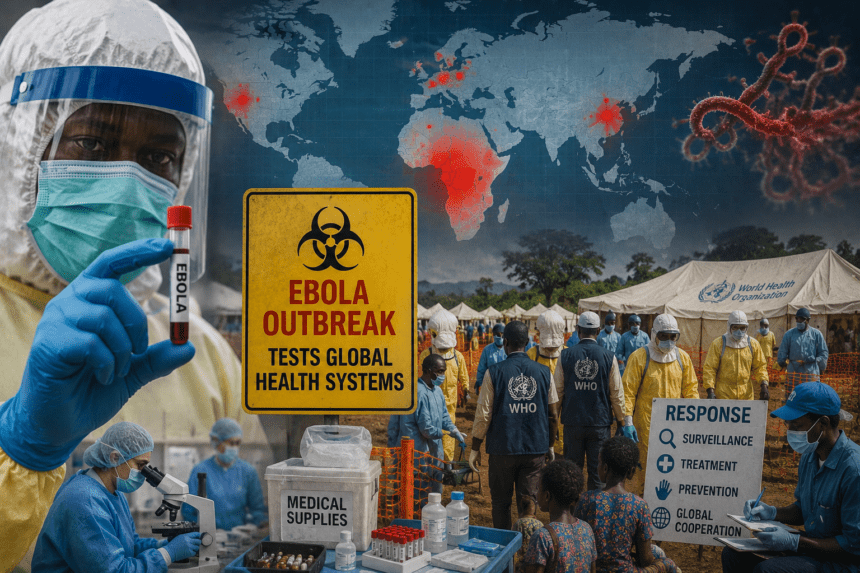
Geneva: A resurgence of Ebola cases in parts of Africa is placing renewed pressure on global health systems, prompting international agencies and governments to strengthen surveillance, treatment, and containment efforts.
Health authorities warn that the outbreak has highlighted ongoing challenges in responding to highly infectious diseases, particularly in regions with limited healthcare infrastructure. Medical teams are working to identify cases, trace contacts, and provide treatment while attempting to prevent further transmission of the virus.
Experts say the situation underscores the importance of rapid detection, effective public health communication, and international cooperation. Lessons learned from previous outbreaks have led to improvements in diagnostic capabilities, emergency response mechanisms, and vaccine deployment strategies. However, logistical difficulties, misinformation, and resource constraints continue to complicate containment efforts in some affected areas.
Global health organizations have emphasized the need for sustained investment in disease surveillance systems, laboratory networks, and healthcare workforce training to strengthen preparedness against future outbreaks. They also stress that international collaboration remains critical in preventing localized outbreaks from becoming wider regional or global health threats.
Public health specialists note that while Ebola is not easily spread through casual contact, swift action is essential because of the disease’s potentially severe health consequences. Ongoing monitoring and coordinated response efforts are expected to remain a priority as authorities work to bring the outbreak under control.