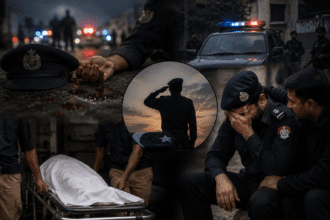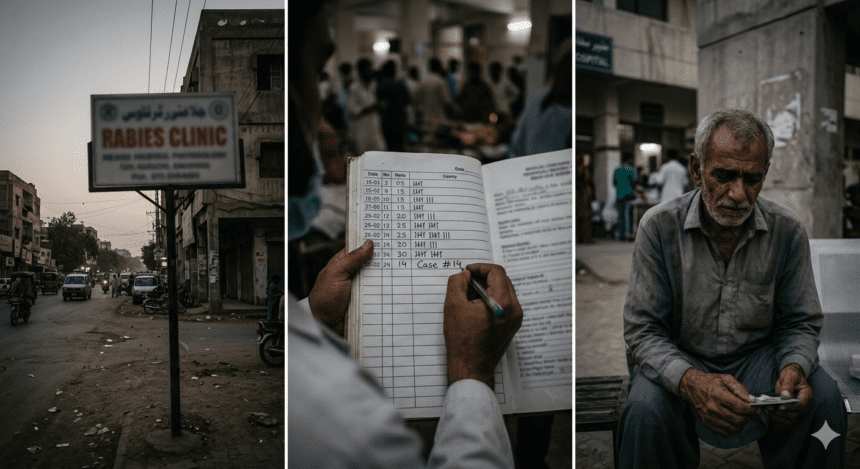
KARACHI — A 12-year-old boy died from rabies at the Civil Hospital on Tuesday, marking the 14th such fatality in Sindh this year. The child, a resident of the city’s outskirts, succumbed to the virus after being bitten by a stray dog nearly three weeks ago.
Medical staff confirmed the boy arrived in the late stages of the disease, leaving doctors with little to offer beyond palliative care. The tragedy underscores a deepening public health crisis that has left local government officials scrambling for solutions while residents face an increasingly hazardous environment.
The surge in cases is tied directly to a systemic failure in the city’s immunization infrastructure. Despite repeated claims by the Sindh Health Department that anti-rabies vaccines (ARV) are available at major hospitals, patients continue to report shortages at primary healthcare centers. Families often find themselves scouring private pharmacies for expensive, imported doses when public supplies dry up.
“We couldn’t find a single dose at the local clinic,” the victim’s uncle told reporters outside the hospital. “By the time we reached the city center, the window for effective post-exposure prophylaxis had already closed.”
Public health analysts point to a two-pronged failure: the lack of a sustainable stray dog population control program and the inconsistent supply chain for life-saving biologics. While the Karachi Metropolitan Corporation (KMC) has launched sporadic culling drives, critics argue these efforts are reactionary and lack the scientific backing required to actually lower the risk of transmission.
The provincial government’s recent pledge to overhaul the rabies control program remains largely on paper. Funding has been allocated, but the distribution mechanism remains bottlenecked by bureaucratic delays and a lack of coordination between municipal authorities and district health offices.
For Karachi’s families, the statistics are no longer just numbers—they are a recurring reality. As the city enters the warmer months, when stray animal movement typically increases, public health experts warn that the toll will likely climb unless the supply of ARVs is decentralized and made accessible at the union council level.
Without a functioning frontline response, the next bite is not just a medical emergency—it is a race against a clock the authorities have yet to synchronize.