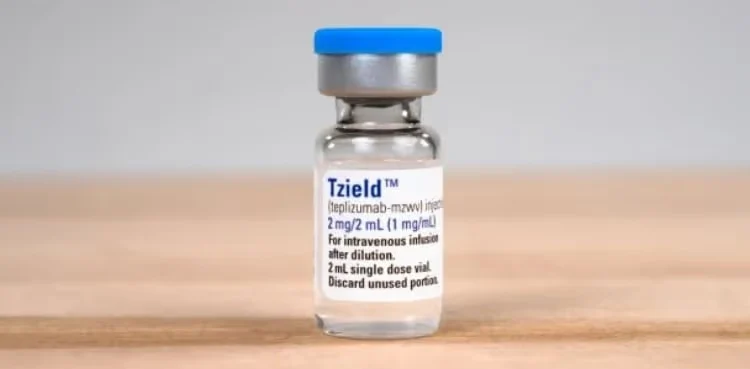
An important development has emerged in the United States regarding the treatment of patients with Stage 2 Type 1 diabetes, where the use of the new drug Tzield has been approved for additional indications.
Tzield is the first and only drug approved by the U.S. Food and Drug Administration (FDA) for the treatment of patients diagnosed with Stage 2 Type 1 diabetes.
According to reports, the U.S. Food and Drug Administration (FDA) has expanded the approval of Tzield, a drug used in the treatment of Type 1 diabetes, and has now approved it for children aged 8 to 17 years who have recently been diagnosed with Stage 3 of the disease.
Previously, the FDA first approved the drug in 2022 to delay the progression of Type 1 diabetes from Stage 2 to Stage 3 in patients aged 8 years and older.
In April this year, the regulator also authorized the use of the drug in children aged one year and older to slow the progression of the disease to Stage 3.
Under the latest approval, the drug can now be administered to children and adolescents who have been diagnosed with Stage 3 Type 1 diabetes within the past few weeks, in order to help preserve the function of insulin producing cells in their bodies for a longer period.
According to experts, Type 1 diabetes is a chronic disease in which the pancreas produces little or no insulin. Patients in Stage 3 commonly experience symptoms such as frequent urination, excessive thirst, and persistent fatigue, which often require insulin therapy.
Tzield targets the immune system response that damages the insulin producing cells of the pancreas, helping the body maintain its natural ability to produce insulin for a longer period.
According to the FDA, the approval is based on a study involving 328 children and adolescents who had been diagnosed with the disease within the previous six weeks. Results obtained after approximately 18 months showed that the decline in the function of insulin producing cells was comparatively lower among patients who received the drug, while a greater decline was observed among those who received a placebo.