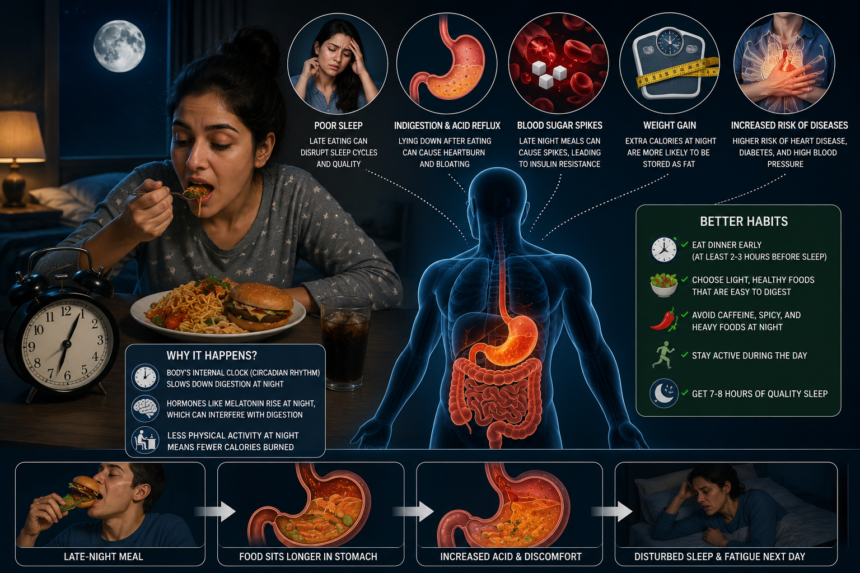
Eating late at night is a common habit in modern lifestyles, especially among students and working individuals. However, regularly eating close to bedtime can negatively affect your digestion, sleep quality, and overall health.
💤 1. Poor Sleep Quality
When you eat late, your digestive system remains active while your body is trying to rest. This can disturb your sleep cycle, making it harder to fall into deep, restful sleep. As a result, you may wake up feeling tired and low on energy.
⚖️ 2. Weight Gain Risk
Late-night eating slows down metabolism because the body is less active during sleep hours. Extra calories consumed at night are more likely to be stored as fat, which can lead to gradual weight gain over time.
🍔 3. Digestive Problems
Eating just before sleeping can cause bloating, acidity, and indigestion. Lying down immediately after eating may also increase the risk of acid reflux and heartburn.
🩸 4. Blood Sugar Imbalance
Frequent late-night meals can disturb insulin levels and increase the risk of blood sugar fluctuations, which may lead to long-term health issues.
😴 5. Morning Fatigue
Heavy meals at night force your body to work during rest hours, which can leave you feeling sluggish and less active in the morning.
🧠 6. Disrupted Body Clock
Your body follows a natural rhythm known as the circadian cycle. Eating late confuses this internal clock, affecting hormones, digestion, and energy levels.
🌿 Conclusion
Occasional late-night eating is not harmful, but making it a regular habit can affect your sleep, weight, and overall health. It is recommended to have dinner at least 2–3 hours before sleeping and choose light, healthy meals at night.