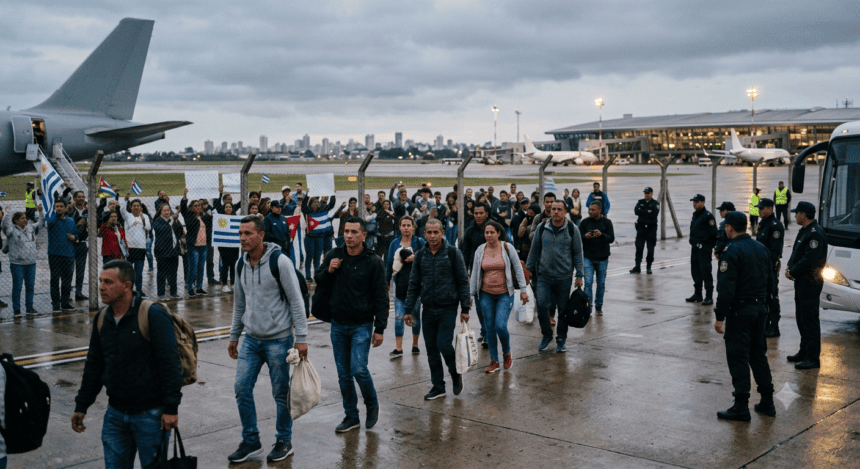
President Donald Trump is signaling a shift in immigration enforcement, proposing a plan to send deported Cuban nationals to Uruguay rather than their home country. The maneuver, intended to exert maximum pressure on the Havana government, has caught officials in Montevideo off guard and threatens to destabilize diplomatic ties across the Southern Cone.
The proposal hinges on the premise that Cuba’s refusal to accept its own citizens back from U.S. custody creates a logistical impasse. By rerouting these individuals to a third country—specifically a regional ally like Uruguay—the Trump camp aims to force a diplomatic crisis, effectively turning a domestic immigration issue into a geopolitical standoff.
Uruguayan officials, speaking on condition of anonymity, confirmed they have received no formal communication regarding such an arrangement. The prospect of hosting a transit center for Cuban deportees has been met with skepticism in Montevideo, where the current administration prioritizes regional stability over becoming a pawn in Washington’s conflict with the island nation.
“This is not a policy; it’s a provocation,” said a senior foreign policy analyst familiar with the discussions. “You don’t just dump foreign nationals into a sovereign country without a bilateral agreement. It violates every norm of international migration law.”
The plan mirrors the “Remain in Mexico” policies of Trump’s first term but carries higher risks. Unlike Mexico, Uruguay shares no border with the United States and has no historical precedent for acting as a holding pen for U.S. deportees. Experts warn that attempting to force such a policy could trigger a diplomatic rift, pushing Uruguay—a traditional U.S. partner—to pivot toward more independent regional alliances.
For the deportees caught in the middle, the uncertainty is absolute. Thousands of Cubans currently in U.S. detention centers face a legal limbo where their home country refuses to issue travel documents and their potential new destination has never agreed to house them.
The strategy ignores the reality of Cuban migration patterns, which are largely driven by economic desperation and political repression. Redirecting these individuals to Uruguay does little to address the root causes of the exodus, serving instead as a blunt instrument of domestic political signaling.
While the Trump campaign frames the initiative as a necessary step to secure the border, the reality remains a logistical nightmare. Without the cooperation of the Uruguayan government, the plan remains a talking point in search of a partner—one that currently shows no interest in signing on.