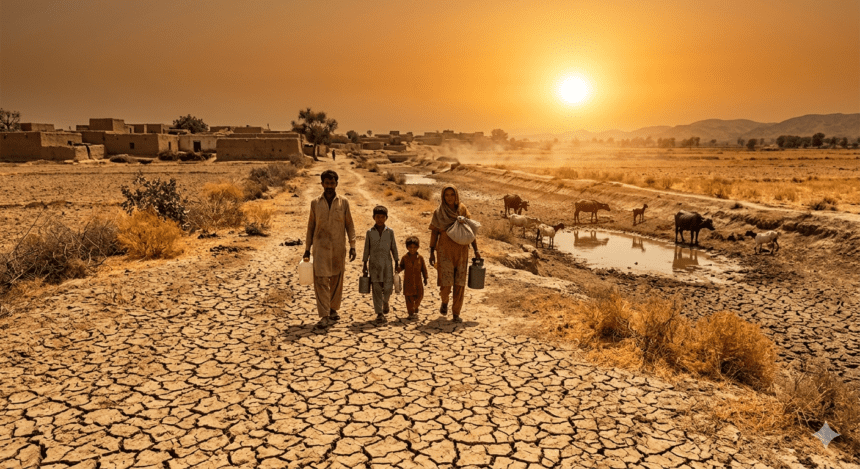
The Pakistan Meteorological Department (PMD) has issued a grim outlook for the next three months: rainfall is expected to stay below normal levels across most of the country, accompanied by sustained, high-intensity heatwaves.
The forecast, released following the department’s latest climate modeling, suggests the traditional monsoon pattern—which usually provides a lifeline for the country’s agrarian economy—will likely underperform through September.
For farmers in Punjab and Sindh, the lack of rain carries immediate consequences. Crops like rice and sugarcane, which rely heavily on consistent moisture during these months, face significant yield risks. Irrigation systems, already strained by aging infrastructure and electricity shortages, will now shoulder the entire burden of keeping the agricultural heartland hydrated.
Urban centers won’t escape the impact. The PMD warns that persistent high temperatures will increase the energy demand for cooling, putting further strain on a national power grid that frequently struggles with supply-demand gaps. Heat-related illnesses are expected to rise, particularly in densely populated cities like Karachi and Lahore, where the “urban heat island” effect exacerbates ambient temperatures.
“The patterns we are observing indicate a significant departure from historical averages,” a senior meteorologist at the PMD told reporters. He stopped short of linking the shift directly to a single climate event, but noted the data points toward a “prolonged period of thermal stress” for the entire region.
The government has yet to announce a comprehensive contingency plan, though the National Disaster Management Authority (NDMA) is reportedly monitoring the situation. Historically, such dry spells lead to water shortages in major reservoirs like Tarbela and Mangla, potentially impacting hydropower generation later in the year.
This isn’t just a weather story. It’s a preview of the economic volatility Pakistan faces as climate change shifts from a theoretical threat to a daily operational reality. Without adequate rainfall, the nation’s food security and energy stability remain in a precarious balance through the end of summer.