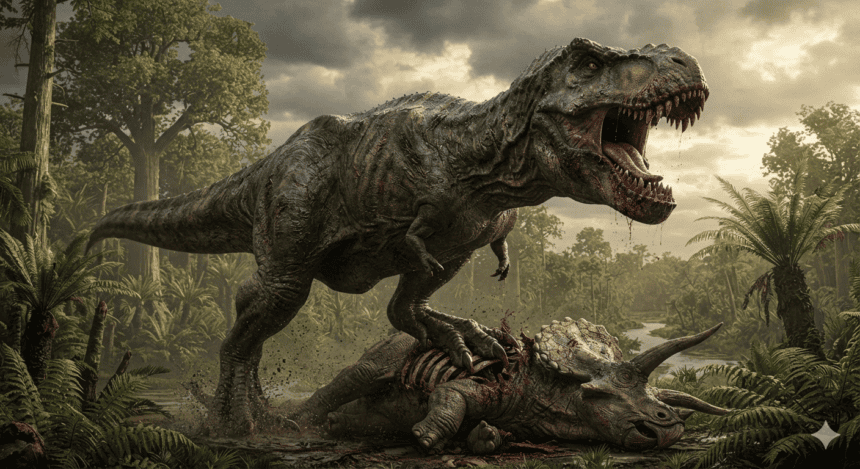
New scientific research suggests that Tyrannosaurus rex (T. rex) may have been even more powerful than previously believed, offering fresh insights into the strength, hunting abilities, and overall biology of one of the most iconic dinosaurs in Earth’s history.
According to researchers, recent analyses of fossilized bones, skull structures, and muscle attachments indicate that T. rex possessed an exceptionally powerful body capable of delivering tremendous force while hunting and defending itself. Scientists believe the dinosaur’s neck, jaws, and leg muscles were stronger than earlier estimates suggested.
T. rex lived approximately 66 to 68 million years ago during the Late Cretaceous Period and is considered one of the largest land predators to have ever existed. It could grow up to 12–13 meters (40–43 feet) in length, stand about 4 meters (13 feet) tall at the hips, and weigh between 7 and 9 tonnes.
Researchers say its massive skull and powerful jaws allowed it to generate one of the strongest bite forces of any known land animal. The dinosaur’s serrated teeth were capable of crushing bone, enabling it to consume large prey efficiently. New computer simulations suggest that its muscular body may have provided greater stability and force during attacks than previously understood.
Scientists also continue to debate whether T. rex was primarily an active hunter, a scavenger, or both. Most current evidence indicates it likely hunted live prey when possible while also feeding on carcasses when opportunities arose.
The latest findings contribute to a better understanding of dinosaur evolution and biomechanics. Researchers emphasize that advances in 3D imaging, digital modeling, and fossil analysis are allowing scientists to reconstruct prehistoric animals with greater accuracy than ever before.
Experts hope continued discoveries will reveal more about how T. rex moved, hunted, interacted with its environment, and became one of the most successful apex predators of the prehistoric world.