New scientific research suggests that the Velociraptor, one of the most famous dinosaurs in popular culture, looked and behaved much more like a modern bird than the fearsome reptilian predator often portrayed in Hollywood films.
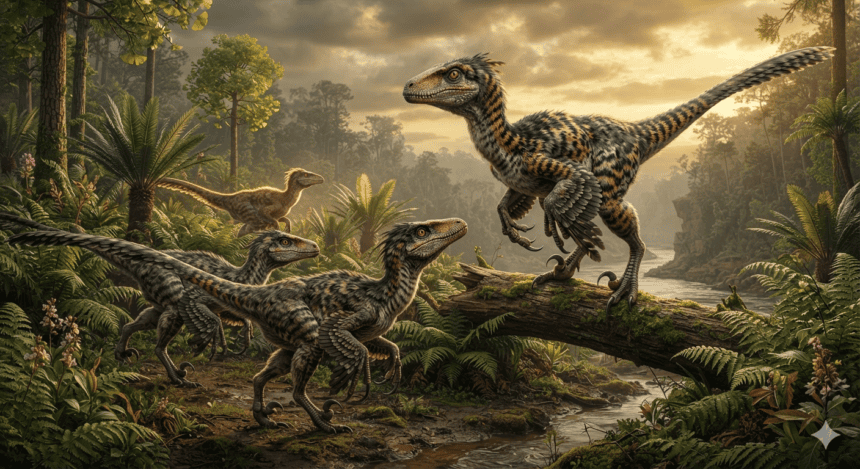
According to paleontologists, fossil evidence collected over the past two decades has confirmed that Velociraptors were covered in feathers, making them far different from the scaly creatures depicted in many movies. Researchers say these feathers were likely used for display, insulation, and balance rather than flight.
Velociraptors lived approximately 75 to 71 million years ago during the Late Cretaceous Period in what is now Mongolia and parts of China. Contrary to their movie portrayal, they were relatively small dinosaurs, measuring about 2 meters (6.5 feet) in length and weighing only 15 to 20 kilograms.
Scientists believe Velociraptors were agile and intelligent predators that hunted small animals using their sharp teeth, grasping hands, and the distinctive curved claw on each hind foot. Evidence also suggests they may have relied on speed, coordination, and strategic hunting techniques rather than brute strength.
Researchers explain that modern birds are the closest living relatives of dinosaurs, and discoveries like feathered Velociraptors continue to strengthen the evolutionary link between birds and their prehistoric ancestors.
Advanced fossil analysis, CT scanning, and computer modeling have enabled scientists to reconstruct the dinosaur’s appearance more accurately than ever before. These studies indicate that the real Velociraptor was slimmer, lighter, and more bird-like than its cinematic counterpart.
Experts say Hollywood’s portrayal was designed for dramatic effect rather than scientific accuracy, helping create one of cinema’s most memorable dinosaurs. However, ongoing discoveries continue to reshape public understanding of these prehistoric animals.
The latest findings provide valuable insights into dinosaur evolution and demonstrate how scientific discoveries can transform long-held perceptions of Earth’s ancient wildlife.