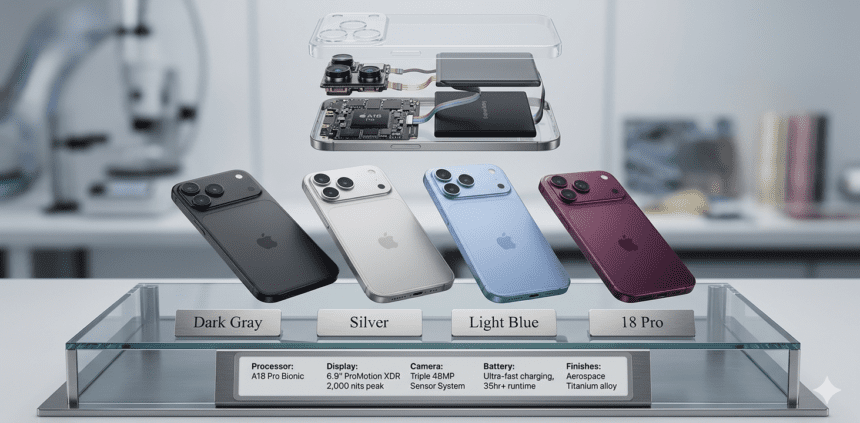
Apple’s flagship smartphone, iPhone, hasn’t taken a year off from its updates since 2007, and 2026 won’t be any different. The tech giant is widely expected to launch its new lineup later this year, including the base iPhone 18, the 18 Pro, the 18 Pro Max, and potentially a first-ever foldable model rumored as the iPhone Fold Ultra. The devices will run on the newly announced iOS 27 operating system.
The big reveal is anticipated in September, coinciding with John Ternus officially taking over as Apple’s new CEO on September 1. However, consumers should prepare for a notable price hike. A global shortage in memory components, colloquially termed “RAMageddon” due to the booming artificial intelligence industry, has driven up production costs. Outgoing CEO Tim Cook warned that price increases are unavoidable, with market analysts estimating that the iPhone 18 Pro could retail around $1,299—a $200 jump from its predecessor—driven by a $150 increase in the cost of its memory chips alone.
In terms of hardware and design, display sizes are expected to mirror last year’s models at 6.3 inches for the base and Pro versions, and 6.9 inches for the Pro Max. Reports suggest significantly brighter screens, a smaller Dynamic Island notification cutout on the base model, and a unified glass back replacing the older two-tone design on the Pro. Color options for the Pro lineup will reportedly feature silver, gray, light blue, and a new “dark cherry” deep red, while solid black appears to be absent.
Internally, Apple is standardizing memory with 12GB of RAM across all models, alongside next-generation A20 and A20 Pro processors. The premium models will also see upgraded cellular connectivity via a new C2 modem with 5G satellite support, an N2 chip for faster wireless internet, and larger batteries exceeding 5,000mAh. The camera system is slated for a massive upgrade, introducing a variable aperture lens on the Pro models to allow mechanical control over light intake. This will enable natural, hardware-based background blur rather than relying entirely on software processing. Finally, the devices will debut a smarter, revamped Siri powered by Google’s Gemini, focused purely on practical utility and on-screen context understanding.