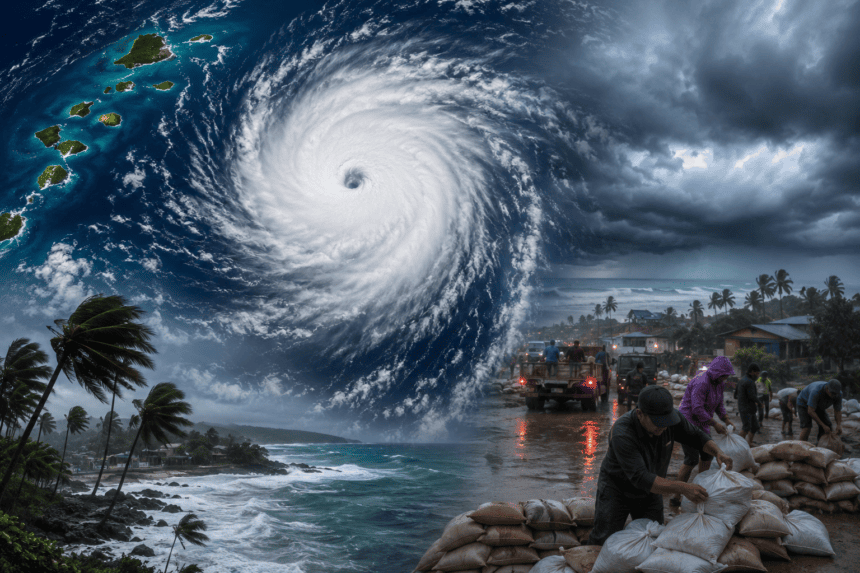
Super Typhoon Bavi is tracking toward the US Pacific islands, packing sustained winds that have forced authorities to issue emergency alerts across the region. Meteorologists are tracking the storm’s path as it intensifies over the warm Pacific waters, with landfall expected to bring life-threatening conditions to local infrastructure.
Emergency management agencies have shifted to high alert. They’ve begun coordinating evacuation efforts for residents in low-lying coastal areas, where storm surges pose the most immediate danger. Power grids and communications networks are already being reinforced, though officials warn that outages are likely once the outer bands hit the islands.
The storm’s rapid intensification has caught regional experts off guard. While seasonal typhoons are standard for this geography, the sheer speed at which Bavi reached “super” status—exceeding wind speeds of 150 mph—has limited the window for final preparations.
“The wind speeds are the primary concern right now,” said a lead meteorologist at the regional weather center. “We’re looking at structural damage to homes and potential flooding that could isolate entire communities for days.”
Local governments have opened emergency shelters and distributed supplies, but the logistics of island geography remain a hurdle. Supply chains are already being diverted, and non-essential flights have been grounded. Residents are being told to secure their homes and stockpile water, as the storm is expected to linger over the territory for several hours.
This isn’t the first time the islands have faced extreme weather, but the intensity of Bavi is pushing current disaster protocols to their limit. Beyond the immediate threat of wind and rain, the long-term impact on the islands’ agriculture and local economy remains the primary concern for regional leaders.
Emergency crews remain on standby, waiting for the winds to drop below safe operating levels before beginning search-and-rescue assessments. The region is bracing for a long night, with the worst of the impact expected to hit within the next twelve hours.