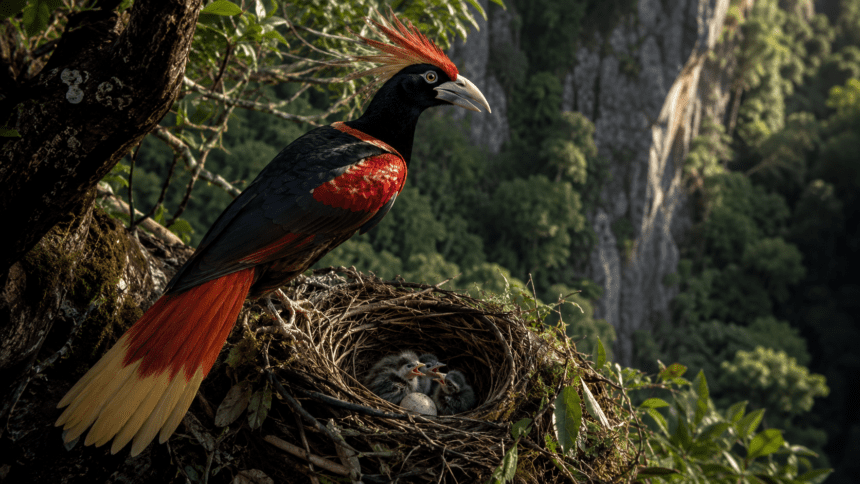
Kimberley: Conservationists in Western Australia have discovered nests belonging to the endangered Red Goshawk, a rare bird of prey described as one of Australia’s most remarkable and elusive raptors.
The nests were found in the remote Kimberley region, including at the Charnley River–Artesian Range Wildlife Sanctuary and on Dambimangari Country. The discovery has been welcomed as an important breakthrough because Red Goshawks are rarely seen and even more rarely found nesting.
The Red Goshawk is considered Australia’s rarest bird of prey. It is known for its powerful flight, striking reddish plumage and preference for large, mature trees near rivers and woodlands. Because the species lives across vast and often difficult terrain, tracking its breeding sites has long been a challenge for researchers.
Conservation teams said finding the nests will help them better understand where the birds are breeding, what habitat they rely on, and how future protection efforts should be planned. In conservation work, a nest is not just a nest. It can reveal feeding patterns, breeding timing, territory size and the kind of landscape a species needs to survive.
The discovery is especially important because the Red Goshawk has been declining across much of its range. Habitat loss, changed fire patterns, land clearing and reduced availability of suitable nesting trees are among the major threats facing the species.
Experts say protecting nesting areas is crucial. If breeding sites are disturbed or lost, the species can struggle to recover because rare birds of prey usually reproduce slowly and need large territories.
Traditional Owners and wildlife researchers played a key role in the search. Their knowledge of the landscape, combined with scientific monitoring, helped teams identify areas where the birds were likely to nest.
The find has raised hopes that more Red Goshawk breeding sites could be discovered in the Kimberley and other remote regions. Conservationists say continued monitoring will be needed to confirm whether the nests remain active and whether young birds successfully fledge.
For now, the discovery offers a rare piece of good news for a species under pressure. It also shows why protecting remote habitats matters: sometimes, the survival of an endangered bird depends on finding one hidden nest at a time.