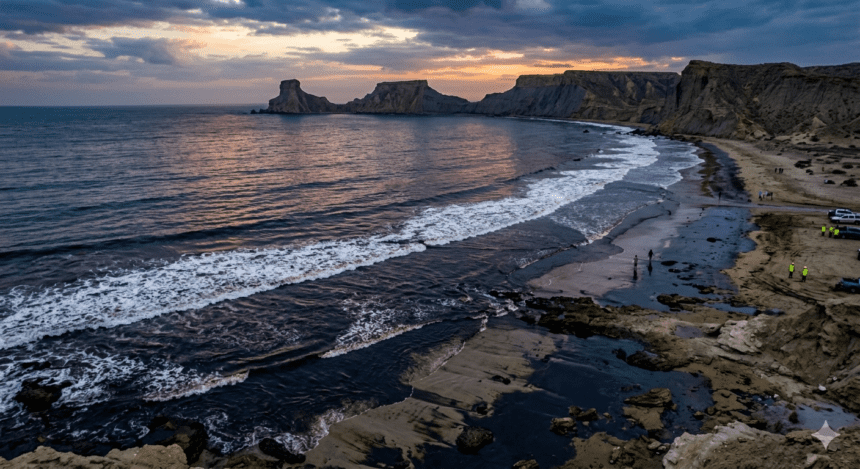
Thick, black sludge began washing up on Gwadar’s pristine beaches early Tuesday morning, coating the shoreline in a viscous layer of crude oil. Local authorities have yet to identify the source of the spill, leaving the coastal community to scramble as the slick spreads across the Pishukan and Ganz areas.
The environmental fallout is immediate. Fishing boats, the lifeblood of the local economy, sit idle in the harbor as captains fear the oil will ruin their nets and contaminate the catch. Thousands of residents depend on these waters for their daily survival; for them, the spill isn’t just an eyesore—it’s a direct threat to their livelihood.
“We woke up to the smell of chemicals and the sight of black tide,” said a local fisherman who has worked these waters for three decades. “If this reaches the deep-sea fishing zones, we are looking at months of lost income.”
Environmental experts on the ground point to a lack of containment equipment. While the Gwadar Development Authority (GDA) and local maritime officials have mobilized, their initial efforts to manually collect the sludge have proven insufficient against the scale of the contamination. The current suggests the slick is moving further east, threatening critical mangrove habitats that serve as nurseries for regional marine life.
The mystery surrounding the spill’s origin has sparked sharp criticism from local activists. They argue that increased maritime traffic near the port—without proper safety oversight or emergency response protocols—was an accident waiting to happen.
While the provincial government has promised an investigation, history in the region suggests these probes often stall. For now, the focus remains on containment. As the tide continues to push the oil further inland, the window to prevent a long-term ecological disaster is closing fast.
Whether this was a leak from a passing tanker or a breach at the port’s loading facility, the environmental toll is already mounting. Residents aren’t waiting for an official report to understand the damage; they are watching the black tide claim their coastline, one wave at a time.