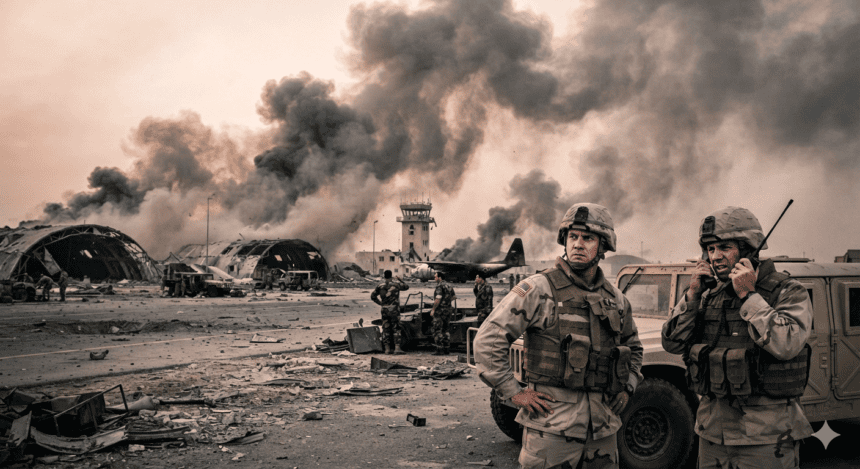
Israeli warplanes struck a major military air base near Homs early Tuesday, hitting infrastructure suspected of facilitating Iranian arms transfers. The strike, which leveled a hangar and damaged a runway, has triggered a sharp, behind-the-scenes backlash from the Biden administration.
Washington officials, speaking on condition of anonymity, described the operation as a “needless escalation” that threatens to destabilize ongoing de-confliction channels in the region. The White House has spent months urging restraint, fearing that aggressive targeting of Syrian facilities could inadvertently pull U.S. forces into a broader confrontation.
For Israel, the calculus is narrow. Military planners view the Homs facility as a primary transit point for precision-guided munitions destined for Hezbollah in Lebanon. By hitting the base, the Israeli Defense Forces (IDF) are signaling that their “campaign between wars” remains active, regardless of diplomatic pressure from their closest ally.
The strike comes at a precarious moment. U.S. diplomats are currently navigating a fragile series of back-channel negotiations aimed at preventing a regional spillover of the conflict in Gaza. A senior State Department aide noted that such operations “complicate the diplomatic heavy lifting” required to keep local tensions from boiling over into a direct regional war.
The IDF declined to comment on the specific operation, maintaining its long-standing policy of silence regarding individual sorties in Syrian airspace. However, military analysts in Tel Aviv suggest the strike was designed to be precise enough to avoid mass casualties, but destructive enough to signal that Israel’s intelligence reach remains unfettered.
Damascus has predictably condemned the attack as a violation of its sovereignty, though its response has been limited to formal protests at the United Nations. With the Syrian military already stretched thin and heavily reliant on Russian air defense assets—which remained silent during the Tuesday engagement—the regime lacks the capacity for a meaningful military retaliation.
The disconnect between Jerusalem and Washington is widening. While both nations share the goal of curbing Iranian influence, they are increasingly divided on the methods. The U.S. prefers containment through diplomacy; Israel is betting on attrition through kinetic force.
As the dust settles over the Homs facility, the incident serves as a stark reminder: Israel is prepared to act alone, even when it means testing the patience of its most vital strategic partner.