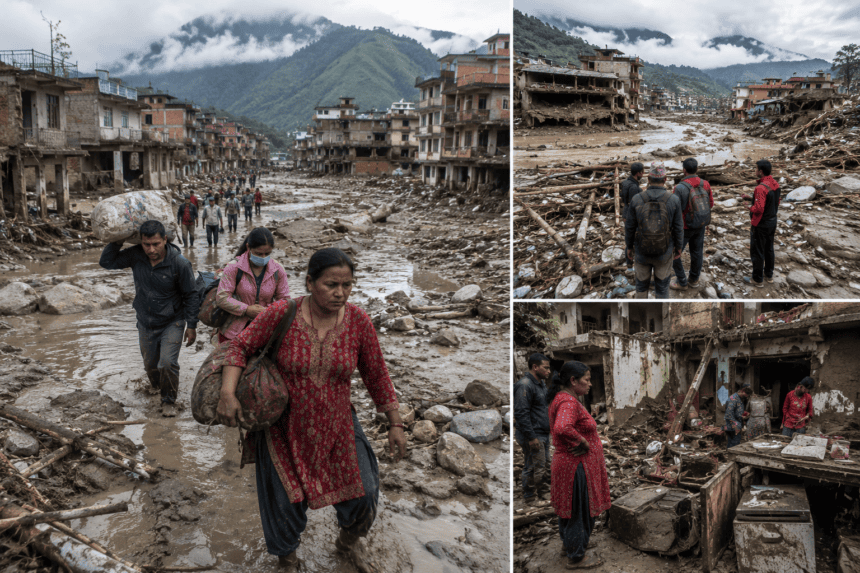
The water has receded, but the reality is far worse than the images broadcast on television. Thousands of residents are returning to towns like Roshi and Panauti today, finding their homes either swept away or packed floor-to-ceiling with thick, suffocating river silt.
For many, the trek back is the first time they’ve seen the wreckage since the floods hit last weekend. The disaster, triggered by the heaviest rainfall in over two decades, has claimed more than 200 lives. The death toll is expected to climb as rescue crews finally reach isolated mountain villages cut off by landslides.
“I spent twenty years building that house,” said Ram Bahadur, 54, as he clawed through debris in his former living room. “Now, I’m just looking for a photo frame or a kitchen pot. There’s nothing left to save.”
The government’s response has been slow, hampered by the sheer scale of the destruction. Highways connecting Kathmandu to the rest of the country remain partially blocked, making the delivery of food, clean water, and medicine a logistical nightmare. While the military has deployed helicopters to drop supplies, survivors in the hardest-hit rural districts say the aid hasn’t reached them yet.
Local authorities are struggling to manage the public health risks. With stagnant water pooling in streets and sewage lines ruptured, the threat of waterborne diseases is mounting. Doctors in makeshift clinics are already reporting spikes in skin infections and diarrhea, yet medical supplies are running dangerously low.
The economic fallout will be felt for years. The floods didn’t just target homes; they wiped out thousands of acres of standing rice crops just weeks before harvest. For a nation where agriculture is the backbone of the economy, this loss is catastrophic. Small business owners are staring at empty storefronts, their inventory ruined by mud and debris.
As the sun sets over the valley, there is no electricity and no clear plan for reconstruction. Families are huddling under tarps or sleeping in the shells of their destroyed homes, waiting for the government to announce a timeline for compensation.
For now, the only sound in the once-bustling towns is the scraping of shovels against hardened mud. The cleanup has begun, but for the people of Nepal, the disaster is far from over.