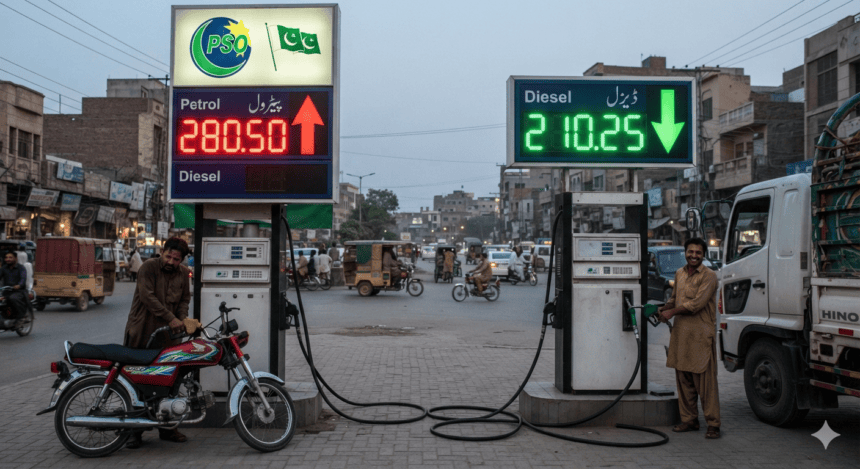
The federal government has adjusted fuel prices, pushing petrol up by Rs1.35 per liter while providing a slight reprieve for diesel users with a reduction of Rs3.85. The new rates took effect at midnight, landing at the pumps as commuters brace for the broader inflationary impact.
Petrol now retails at Rs248.38 per liter. While the increase is modest, it hits a public already struggling with stagnant wages and rising utility bills. The move marks a shift from the previous fortnightly trend, where prices had seen consecutive downward adjustments.
Diesel—the backbone of the country’s transport and agriculture sectors—dropped to Rs255.14 per liter. Lower diesel costs often signal a potential cooling of freight charges, though the real-world impact on grocery prices remains a point of contention between the government and consumer rights advocates.
Finance ministry officials pegged the decision to international market fluctuations. The global price of refined products dictates the domestic landed cost, and the government’s current tax structure leaves little room for maneuver when global indices turn bullish.
Independent analysts point to the volatility of the rupee against the dollar as the silent culprit behind these adjustments. Even when global oil prices stabilize, any weakness in the local currency forces an automatic climb at the pump to bridge the import gap.
Transport unions have already signaled that they won’t be lowering fares based on the minor diesel cut. “A drop of a few rupees doesn’t cover the rising cost of spare parts and maintenance,” said a representative for the All Pakistan Public Transport Owners Association.
For the average motorist, the relief at the diesel pump is offset by the rising cost of gasoline. With the government locked into strict fiscal targets under the current IMF program, the era of heavy fuel subsidies is effectively over. The price at the pump is now a direct reflection of global market reality—and for most households, that reality remains expensive.