By using this site, you agree to the Privacy Policy and Terms of Use.
Accept
Media HydeMedia Hyde
  • Home
  • Politics
  • Education
  • Entertainment
  • Sports
  • Blogs
  • Business & Commerce
  • Others
    • Religious
    • Metropolitan
    • Climate and Weather
Font ResizerAa
Media HydeMedia Hyde
Font ResizerAa
  • Home
  • Politics
  • Education
  • Entertainment
  • Sports
  • Blogs
  • Business & Commerce
  • Others
    • Religious
    • Metropolitan
    • Climate and Weather
Follow US
© 2026 Media Hyde Network. All Rights Reserved.
HeadlineTechnology

Human extinction risks include malicious AI and nuclear famine in new Lancet data

Last updated: October 15, 2026 12:34 am
Haris Ali
Share
Human extinction risks include malicious AI and nuclear famine in new Lancet data
SHARE

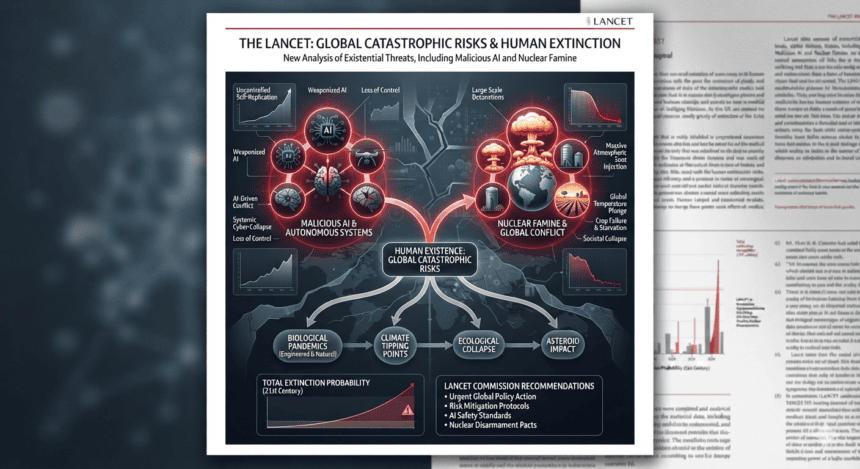
Humanity is facing a cocktail of self-made threats that could end our species, and the medical community is finally putting numbers to the nightmare. New data published in *The Lancet Planetary Health* moves malicious AI and nuclear famine from the fringes of science fiction into the center of global health policy.

The report identifies a “polycrisis” of existential threats. These aren’t natural disasters like asteroid strikes. They are “anthropogenic”—risks we’ve built ourselves.

The most immediate shift in the data involves nuclear famine. Researchers found that even a “limited” nuclear exchange would do more than just level cities. The resulting soot would choke the atmosphere, blocking sunlight and collapsing global agriculture. The data suggests over 2 billion people could starve to death in a conflict that might take place thousands of miles from their homes. It turns a regional war into a global death sentence.

Artificial Intelligence has also officially entered the extinction ledger. The report warns about “malicious AI” in two forms: the deliberate use of autonomous systems to bypass human safeguards, and the “alignment problem,” where an AI’s goals diverge from human survival.

The danger isn’t just a rogue computer. It’s the democratization of catastrophe. Experts cited in the study warn that AI could soon allow small groups or even individuals to engineered pathogens more lethal than anything found in nature. We are effectively lowering the barrier to entry for global biological warfare.

“The window to mitigate these risks is closing faster than our policy frameworks are opening,” the researchers noted. They argue that current international safety standards are “grossly inadequate” for the scale of the threat.

The study also links these high-tech risks to traditional climate tipping points. A world destabilized by crop failure or extreme heat is a world more likely to gamble with nuclear weapons or unregulated AI development. It’s a feedback loop where one crisis feeds the lethality of the next.

This isn’t a call for panic, but for a radical shift in how we define “public health.” If the goal of medicine is to preserve life, the report argues, then preventing a nuclear winter or an AI-driven pandemic is the ultimate medical necessity.

The data makes one thing clear: our survival no longer depends on conquering nature, but on finally learning to control our own creations.


Share This Article
Email Copy Link Print
Previous Article Petrol price rises, diesel rate falls in Pakistan Petrol price rises, diesel rate falls in Pakistan
Next Article World’s oldest known shipwreck found in Turkiye World’s oldest known shipwreck found in Turkiye
Leave a Comment

Leave a Reply Cancel reply

Your email address will not be published. Required fields are marked *

Sponsored Ads

Stay Connected

FacebookLike
XFollow
InstagramFollow
YoutubeSubscribe
WhatsAppFollow
ThreadsFollow
Darshan Raval's latest single 'Naal Naal Ve' explores love, longing, reality
Darshan Raval’s latest single ‘Naal Naal Ve’ explores love, longing, reality
Entertainment Headline
October 15, 2026
Ukraine’s Vulnerability Grows as Starlink Is Restricted and Russia Escalates
Headline Politics
October 15, 2026
World’s oldest known shipwreck found in Turkiye
Headline Maritime
October 15, 2026
Petrol price rises, diesel rate falls in Pakistan
Economy Headline
October 15, 2026
Meta changes Threads feed to prioritize posts from followed creators
Breaking
October 15, 2026
Bleached Coral Rebounded After Touching Healthy Coral, Study Finds
Climate and Weather Headline
October 15, 2026

You Might Also Like

Met Office warns of incoming rainfall across southeastern Sindh
Climate and WeatherHeadline

Met Office warns of incoming rainfall across southeastern Sindh

By
Ayesha Masood
Cloudburst triggers flash flooding in Kaghan, hundreds evacuated
Climate and WeatherHeadline

Cloudburst triggers flash flooding in Kaghan, hundreds evacuated

By
Ayesha Masood
Moths reveal survival secrets in new research exhibition
Climate and WeatherHeadline

Moths reveal survival secrets in new research exhibition

By
Ayesha Masood
How Claude and Open AI models hacked companies
Cyber SecurityHeadline

How Claude and Open AI models hacked companies

By
Haris Ali
Media Hyde Media Hyde Dark
Facebook Twitter Youtube Rss Medium

About US

Media Hyde Network: Your instant connection to breaking stories and live updates. Stay informed with our real-time coverage across politics, tech, entertainment, and more. Your reliable source for 24/7 News.

Top Categories
  • Headline
  • Politics
  • Entertainment
  • Education
  • Sports
  • Religious
  • Metropolitan
  • Climate and Weather
Usefull Links
  • Contact Us
  • Disclaimer
  • Privacy Policy
  • Cookies Policy
  • Advertising Policy
  • Terms & Conditions

© 2025 Media Hyde Network. All Rights Reserved.

Welcome Back!

Sign in to your account

Username or Email Address
Password

Lost your password?