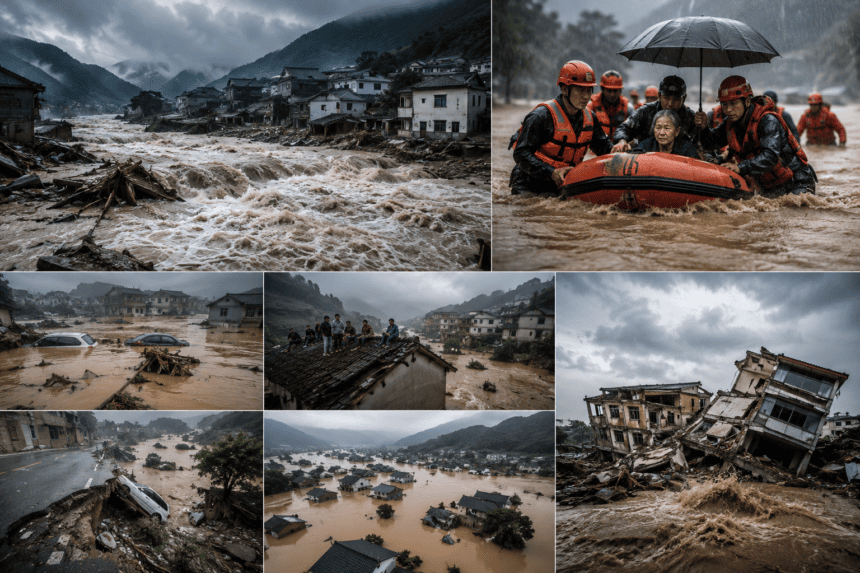
Heavy rains from Typhoon Maysak have claimed at least 15 lives across China’s northeastern provinces, leaving behind a trail of submerged farmland and collapsed infrastructure. The storm, which swept through the region after making landfall earlier this week, triggered severe flash flooding that caught many rural communities off guard.
In Jilin province, emergency crews are still struggling to reach isolated villages where power lines remain down and road access is blocked by thick mud. Provincial authorities confirmed the death toll late Thursday, noting that the majority of casualties occurred when homes failed under the weight of surging water and debris.
Local farmers are facing a grim reality. Thousands of acres of corn—a critical crop for the region—now lie flattened under standing water. The financial impact is still being calculated, but agriculture experts expect the damage to hit local supply chains hard as harvest season approaches.
“The water rose faster than anyone anticipated,” said a local resident in Yanji, who spent the night on his roof as the ground floor of his home disappeared. “We’ve seen storms before, but nothing that turned the streets into rivers this quickly.”
While the eye of the storm has moved on, the risk isn’t over. Meteorological stations across Liaoning and Heilongjiang have issued continued warnings for secondary landslides. The ground is saturated, and even moderate rainfall could trigger further collapses in hilly terrain.
Government officials deployed over 5,000 rescue personnel to the affected areas, utilizing inflatable boats to ferry trapped residents to temporary shelters in schools and community centers. Despite the mobilization, criticism is mounting online regarding the speed of the initial warnings, with many residents claiming they didn’t have enough time to secure their property before the deluge began.
Displaced families are now looking at weeks of recovery, with the regional government promising emergency aid packages. For now, the focus remains on search and rescue operations, as crews comb through the wreckage of homes in hopes of finding survivors among the debris.