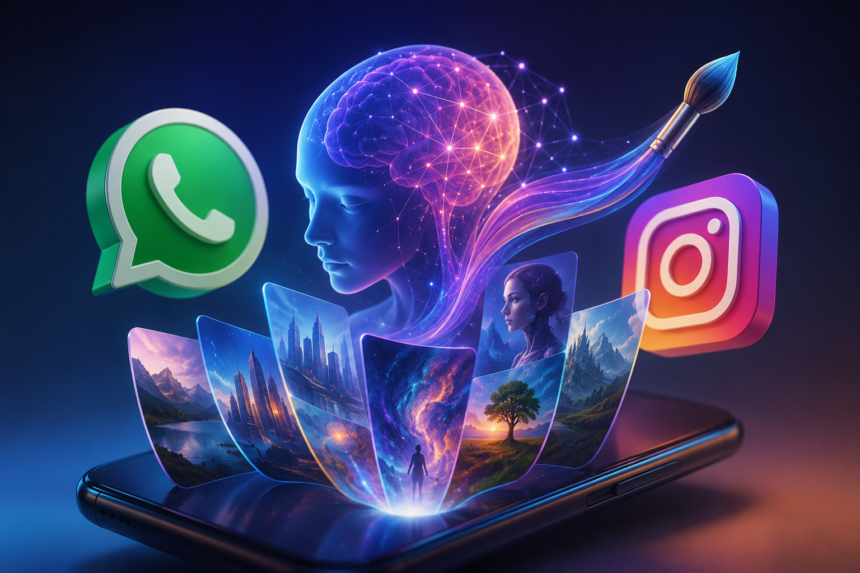
Meta is rolling out a new image generation tool, Muse, directly into WhatsApp and Instagram. Unlike previous iterations of AI-powered creative tools, this system is built on a “reasoning” framework designed to interpret complex prompts with higher accuracy and stylistic consistency.
The rollout marks a shift in how Meta handles generative media. Rather than relying on simple pattern matching, the model aims to understand the spatial relationships and logical constraints requested by users. If a user asks for a specific subject in a particular lighting environment or interaction, the system processes those parameters as a logical set of instructions rather than just keywords.
For WhatsApp users, the tool appears as an integrated feature within the chat interface, allowing for image creation without leaving the app. Instagram users gain access to the model through the creative suite, which Meta expects will streamline content creation for creators who previously relied on third-party apps for high-fidelity visuals.
The underlying architecture represents Meta’s attempt to challenge competitors like Midjourney and OpenAI’s DALL-E 3 by embedding the technology into the world’s most-used messaging and social platforms. By bringing “reasoning” to the forefront, the company claims it has reduced the “hallucination” rate—where AI ignores specific prompt details—by nearly 30% in internal benchmarks.
Critics, however, remain focused on the privacy implications of integrating generative models into private messaging. While Meta has implemented watermarking for AI-generated assets, the ease of access raises questions about the proliferation of deceptive content. The company has stated that all images generated via Muse will carry invisible metadata and a visible tag to identify them as AI-produced.
The deployment is staggered, with initial access granted to users in select regions before a wider global release. For Meta, the move is less about the novelty of image generation and more about keeping users within its ecosystem. By automating the creative process, the company is betting that the path of least resistance will become the new standard for digital communication.