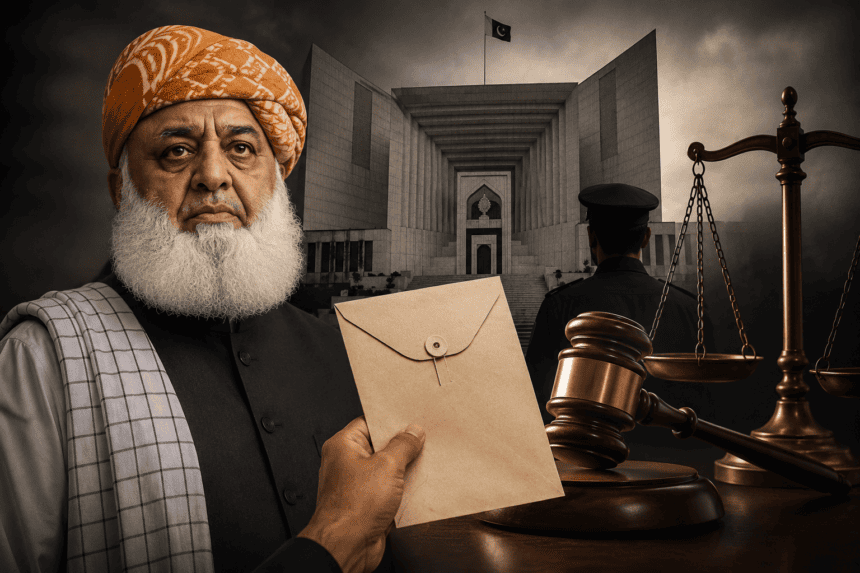
A district and sessions court in Islamabad has summoned Jamiat Ulema-e-Islam-Fazl (JUI-F) chief Maulana Fazlur Rehman to respond to allegations regarding his recent remarks against state institutions. The court issued the summons following a petition filed by a local citizen, who argued that the veteran politician’s statements undermined the dignity and credibility of the country’s core establishments.
The petitioner, Advocate Ali Raza, alleged that the JUI-F leader’s public criticism crossed the line from political discourse into institutional defamation. He urged the court to initiate legal proceedings, claiming the rhetoric could incite public sentiment against the judiciary and security apparatus.
The summons arrives at a sensitive juncture for the JUI-F, as the party navigates a shifting political landscape. Maulana Fazlur Rehman, known for his acerbic critiques and influential role in coalition politics, has yet to issue a formal response to the court’s order.
Legal experts suggest the case hinges on the interpretation of “defamation” versus “freedom of speech.” In recent years, the courts have seen a spike in petitions targeting political figures for their public rhetoric, often leaving judges to balance the constitutional right to critique with the legal protections afforded to state institutions.
The court has directed the JUI-F chief to appear in person or through legal counsel at the next hearing. Failure to comply could lead to the issuance of warrants, a move that would likely escalate tensions between the opposition leader and the judicial process.
For now, the focus remains on the upcoming hearing. Whether the case proceeds to a full trial or is dismissed on procedural grounds, the summons serves as a stark reminder of the narrowing space for political rhetoric in the current legal climate.