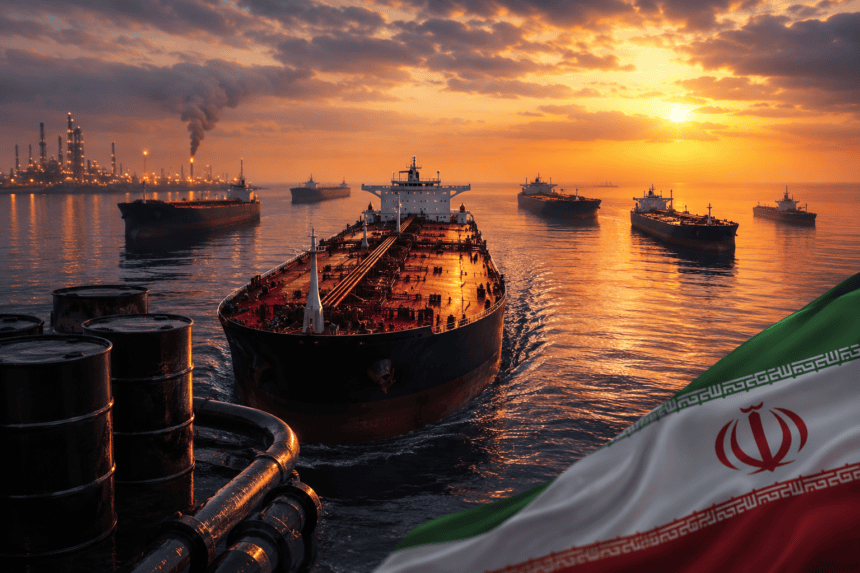
Tehran’s oil exports didn’t stop when tensions with Washington cooled. Even as the U.S. and Iran maintained a fragile, de facto cease-fire to prevent regional escalation, Iranian tankers quietly moved billions of dollars in crude to international markets.
This isn’t just about trade; it’s a bypass of the sanctions architecture the U.S. spent years erecting. While the White House focused on containing proxies in Lebanon and Gaza, Iran leveraged a sprawling “ghost fleet” of aging tankers to keep its economy afloat.
The strategy is simple. Iran uses vessels with obscured ownership, frequently switching off transponders to vanish from satellite tracking. Once in international waters, they engage in ship-to-ship transfers, masking the origin of the crude before it reaches refineries in Asia. Analysts estimate this shadow operation generates enough revenue to fund state priorities that Washington is actively trying to squeeze.
“They have perfected the art of the pivot,” said one energy strategist familiar with maritime tracking. “Every time the U.S. tightens the screws on one route, the Iranians open two more. It’s a high-stakes game of whack-a-mole where the stakes are measured in billions.”
For the Biden administration, the dilemma is acute. Enforcing a total oil blockade would likely force oil prices higher—a political nightmare in an election year. So, the U.S. has opted for a measured approach: selective enforcement and diplomatic pressure, rather than an all-out naval confrontation.
Critics argue this policy is toothless. They point to the sheer volume of Iranian oil hitting the market as evidence that the “maximum pressure” campaign has lost its teeth. Tehran, meanwhile, has leaned into this ambiguity, using the relative quiet of the cease-fire to solidify its revenue streams.
The oil continues to move, the tankers keep their transponders dark, and the revenue keeps flowing into Tehran. As long as the global market demands cheaper supply, Iran’s shadow fleet remains the most effective tool in its arsenal—and the U.S. appears to have run out of ways to stop it without breaking the market.