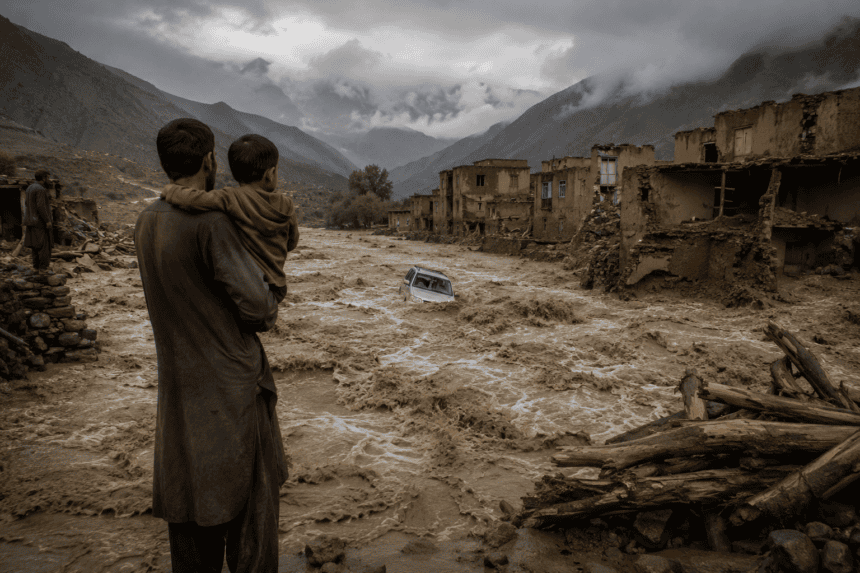
At least 23 people are dead after heavy seasonal rains triggered devastating flash floods across multiple provinces in Afghanistan. The surge of water, which began late Thursday, swept through homes and destroyed vital infrastructure in regions already struggling with the aftermath of decades of conflict and economic collapse.
The death toll is expected to rise as rescue crews reach isolated villages in the central and northern provinces. Disaster management officials confirmed that dozens more remain missing, while hundreds of homes have been reduced to rubble.
“The water came down the mountains like a wall,” said a resident in Ghor province, one of the hardest-hit areas. “We had no time to save our livestock or our grain stores.”
For families living in these rural districts, the loss is total. The floods didn’t just claim lives; they wiped out the season’s harvest and destroyed the limited irrigation systems that sustain local agriculture. In a country where over 80% of the population relies on farming, this destruction guarantees long-term food insecurity for thousands.
Rescue efforts remain hampered by destroyed roads and damaged bridges. The Taliban-led administration’s disaster management authority has dispatched small teams to the affected zones, but their capacity is stretched thin. They lack the heavy machinery required to clear mud-clogged mountain passes and the medical supplies needed to treat those pulled from the debris.
International aid organizations have faced significant hurdles in delivering assistance. Strict restrictions on female aid workers—a policy enforced by the de facto authorities—have complicated the distribution of emergency supplies, leaving many vulnerable families waiting for help that may be days away.
The climate crisis is hitting Afghanistan with brutal frequency. While the country accounts for a negligible fraction of global carbon emissions, it consistently ranks among the most vulnerable nations to extreme weather. This year’s erratic rainfall patterns follow a particularly harsh winter, leaving the soil brittle and unable to absorb the sudden deluge.
With more rain forecast for the coming week, the window for emergency intervention is closing. For the survivors currently huddled in temporary camps or staying with relatives in neighboring districts, the immediate challenge is survival. Beyond that, they face the grim reality of rebuilding their lives in a landscape that has been fundamentally altered by the rising waters.