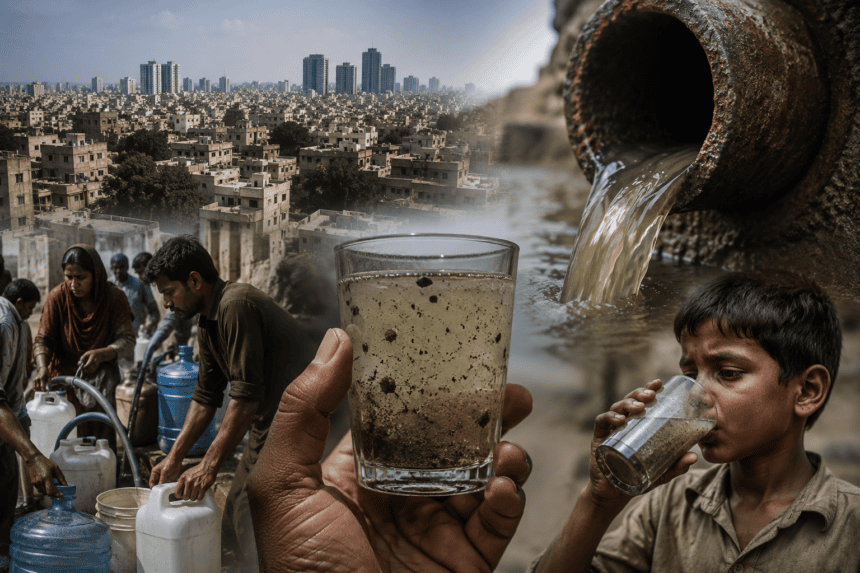
Families in Gulshan-e-Iqbal are waking up to a recurring nightmare: brown, foul-smelling water pouring from their kitchen taps. For weeks, residents in multiple blocks of the densely populated district have reported that the water supply is not only discolored but carries a pungent, chemical-like odor, rendering it unfit for drinking or cooking.
The crisis stems from aging, leaking pipelines that cross-contaminate with sewage lines buried inches away. As pressure in the main supply lines drops, the pipes pull in surrounding groundwater—a cocktail of waste and bacteria—directly into the homes of unsuspecting families.
“We’ve stopped drinking tap water entirely, but even bathing with it has started causing skin rashes,” said Aslam Khan, a resident of Block 13-D. He noted that the local water board has ignored repeated complaints for months. “They tell us to buy tankers, but why should we pay for private water when we already pay our utility bills?”
The financial burden is hitting households hard. With the municipal supply compromised, residents are forced to rely on private water tankers, which have hiked prices citing fuel costs and increased demand. For middle-income families, the added expense is unsustainable.
Local activists point to a systemic failure in the Karachi Water and Sewerage Corporation’s (KWSC) maintenance schedule. While the city faces a chronic water shortage, the quality of the water that does reach the taps remains a secondary concern for officials. Public health experts warn that this contamination is a ticking time bomb for waterborne diseases like typhoid, cholera, and hepatitis, which already see seasonal spikes in the city.
The KWSC has yet to issue a formal statement or provide a timeline for pipe replacement in the affected blocks. Until the infrastructure is overhauled, the residents of Gulshan-e-Iqbal remain trapped between paying for private water or risking their health with the public supply.
For the families living here, the water flowing into their homes isn’t a utility—it’s a hazard.