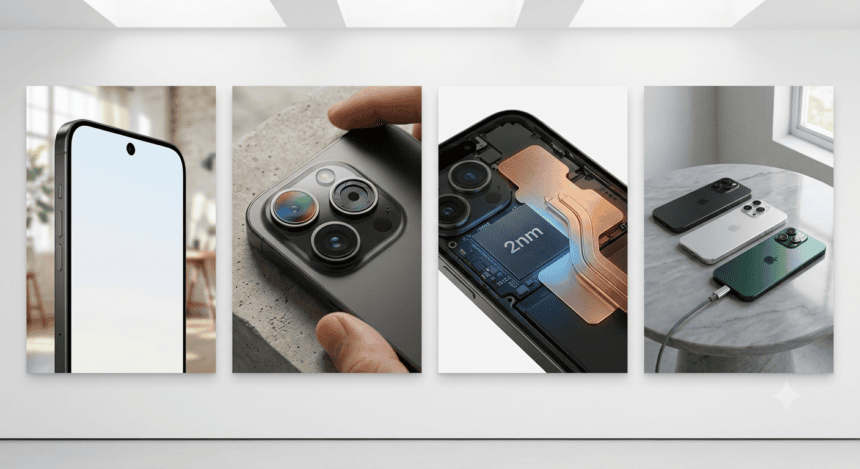
Apple is already steering its supply chain toward the 2026 launch of the iPhone 18 Pro, with early technical blueprints suggesting a departure from the incremental updates of recent years. Industry insiders claim the company is prioritizing a proprietary display technology and a significant overhaul of the camera housing to maintain its grip on the premium smartphone market.
The biggest shift centers on the transition to a fully integrated under-display Face ID system. While previous models kept the “Dynamic Island” as a visible cutout, the 18 Pro is expected to push sensors beneath the active screen area. This change aims to deliver a true edge-to-edge viewing experience, a design goal Apple has chased since the introduction of the iPhone X.
Pricing remains a point of contention. Analysts tracking Apple’s manufacturing costs expect the 18 Pro to start at $1,099, though the integration of advanced 2nm chipsets—likely the A20 Pro—could push that floor higher. Apple’s challenge is balancing these rising production costs against a global market that is showing signs of smartphone fatigue.
The camera array is also undergoing a redesign. Reports suggest a move away from the traditional triple-lens bump in favor of a flatter, more streamlined module. This isn’t just aesthetic; it’s a move to accommodate larger sensor sizes that require more internal surface area. For the user, this translates to better low-light performance and, potentially, a more versatile telephoto range.
Critics point to Apple’s recent history of conservative hardware refreshes, noting that consumers may be reaching a point where yearly performance gains feel negligible. “The hardware is hitting a ceiling,” one supply chain analyst noted, requesting anonymity to protect sensitive vendor relationships. “Apple knows it can’t rely on just another camera bump to drive the next upgrade cycle.”
The company is also reportedly testing a new battery material composition to combat the inevitable degradation that plagues high-performance devices after two years of use. If successful, the iPhone 18 Pro would be the first major handset to offer a significant leap in battery longevity without adding bulk.
Apple has yet to comment on these leaks, adhering to its standard policy of silence regarding unannounced hardware. With the official reveal still roughly 18 months away, these specifications remain subject to the whims of yield rates and prototype testing. However, the trajectory is clear: Apple is betting that a design-first, sensor-heavy approach is the only way to justify the premium price tag of its next flagship.