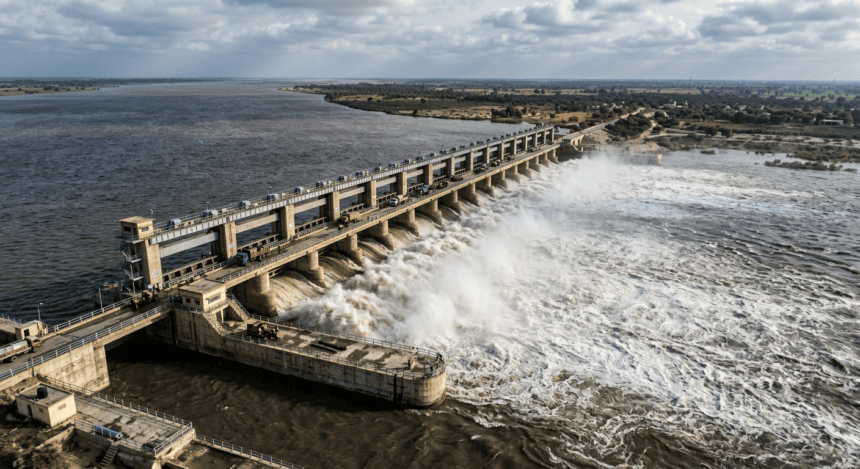
The Indus River recorded a sharp increase of 45,000 cusecs at the Guddu Barrage today, forcing irrigation officials to scramble as water levels climb toward critical thresholds.
The jump in flow—now pushing total discharge figures significantly higher than yesterday—has triggered immediate alerts for downstream districts. While the river remains within the “low flood” category for now, the speed of the surge has left local authorities little room for error.
“We are monitoring the telemetry data by the hour,” an irrigation department source said. “The sudden rise is a direct result of increased snowmelt and rainfall in the upper catchment areas, and we’re bracing for the volume to move toward Sukkur within the next 24 hours.”
The Guddu Barrage, a critical lifeline for agricultural lands in northern Sindh and parts of Balochistan, acts as the first major line of defense against seasonal flooding. When inflow spikes this rapidly, the primary concern isn’t just the current volume, but the integrity of the protective embankments that have faced years of neglect.
For local farmers, the surge is a double-edged sword. While the Indus provides essential irrigation for the upcoming Rabi season, an uncontrolled breach could wipe out standing crops and destroy rural infrastructure.
Disaster management teams have been placed on standby. District administrations are currently checking the status of relief camps and emergency machinery, though past experiences suggest that logistics often lag behind the river’s pace.
The next 48 hours will be decisive. If the flow stabilizes, the barrage will likely manage the pressure without incident. If the surge continues at this rate, the focus will shift from monitoring to evacuation.