The retail price of petrol in Pakistan has become a flashpoint for public frustration, with a significant portion of the pump price tied to government levies and oil marketing company (OMC) margins rather than the actual cost of the fuel itself.
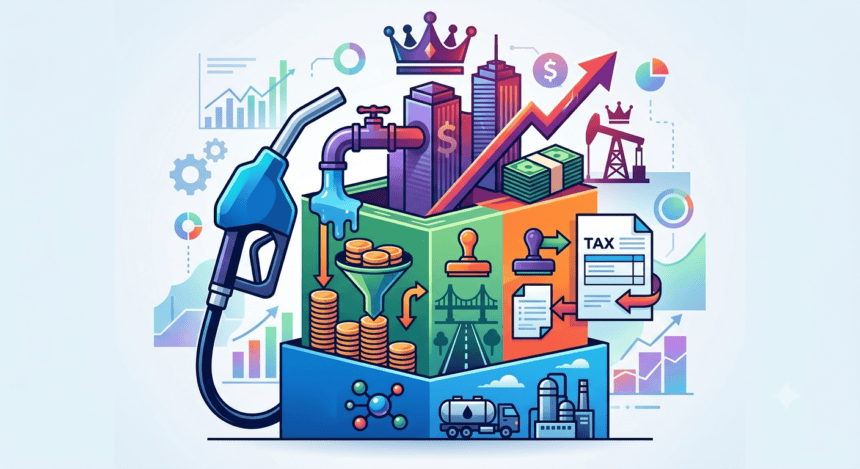
Current market data shows that for every liter of petrol sold at Rs220, the base cost of the product—the actual imported or refined fuel—often accounts for less than half the total. The remainder is consumed by a complex web of Petroleum Development Levies (PDL), General Sales Tax (GST), and fixed dealer and OMC margins.
The math is straightforward but rarely transparent for the average motorist. When global crude prices dip, the relief is frequently blunted by the government’s reliance on fuel taxes to bridge widening fiscal deficits. Finance ministry officials often argue that these levies are essential to meet IMF-mandated revenue targets, yet the burden remains squarely on the consumer.
“We are paying for the inefficiencies of the state and the guaranteed profits of oil companies,” said an independent energy analyst in Islamabad. “When the government raises the PDL, it’s not to subsidize the sector; it’s to cover the budget shortfall. The consumer is essentially acting as a tax collector for the ministry.”
Dealers and oil marketing companies operate on fixed margins, which are periodically adjusted upward to account for inflation and operational costs. While these margins appear small on a per-liter basis—often just a few rupees—they are guaranteed revenue streams that remain insulated from the volatility of international oil markets.
The government’s decision to keep taxes high on fuel is a strategic, if unpopular, choice. With limited room for direct taxation in a struggling economy, fuel remains one of the few commodities where the state can extract consistent, daily revenue.
For the commuter, the distinction between the global market price and the local retail price is academic. They see Rs220 at the pump, and they see the impact on their household budget. As inflation continues to squeeze disposable income, the transparency—or lack thereof—in how that price is built continues to fuel public resentment.
Until the government decouples its revenue collection from the cost of essential transit fuel, the price at the pump will remain as much a political tool as an economic one.