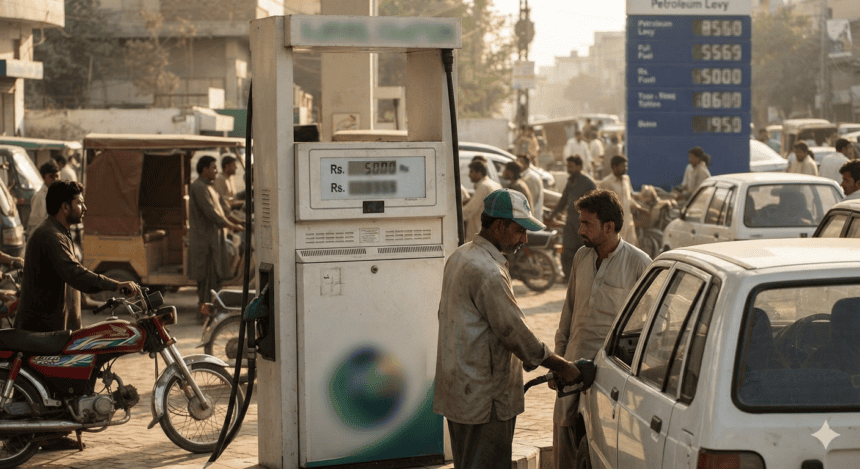
KARACHI — Jamaat-e-Islami Emir Hafiz Naeemur Rehman has accused the federal government of systematically squeezing the public, claiming that Rs8.5 trillion has been extracted from citizens through petroleum levies alone.
He didn’t mince words during a recent press address, framing the levy as a direct hit to the household budgets of ordinary Pakistanis already struggling with persistent inflation. For the JI chief, these aren’t just fiscal figures; they represent a deliberate policy choice that prioritizes debt servicing and government overhead over the basic affordability of fuel.
The government maintains that these levies are essential to meeting fiscal targets and securing support from international lenders. Officials argue that global price volatility leaves them little room to maneuver, forcing them to maintain high tax margins at the pump to bridge the budget deficit.
But Naeem rejects that narrative. He argues that the burden of the state’s inefficiency is being shifted entirely onto the shoulders of the common man. If the government were serious about relief, he suggests, they would slash the ballooning administrative costs and elite privileges that continue to drain the national exchequer.
Beyond the raw math, the statement highlights the growing disconnect between the ruling coalition’s economic strategy and the reality on the street. With fuel prices dictating the cost of transport and essential goods, every adjustment in the levy ripples through the entire supply chain.
The JI has signaled that it won’t let this issue slide. Naeem’s rhetoric suggests a strategy of sustained public pressure, aiming to force a policy shift before the next fiscal review. Whether this pressure can force a rethink in Islamabad, however, remains the central question for a government currently focused on fiscal consolidation above all else.