Prime Minister Narendra Modi has ordered the formation of a high-level committee to overhaul India’s national testing architecture, a move aimed at silencing mounting criticism over recurring paper leaks and systemic failures. The announcement follows a week of intense pressure from student unions and opposition leaders, who have accused the government of institutional negligence.
The new panel faces an immediate, uphill task: restoring credibility to the National Testing Agency (NTA). Recent controversies involving the NEET-UG and UGC-NET exams have left millions of students in limbo, fueling protests that have stretched from college campuses to the streets of the capital.
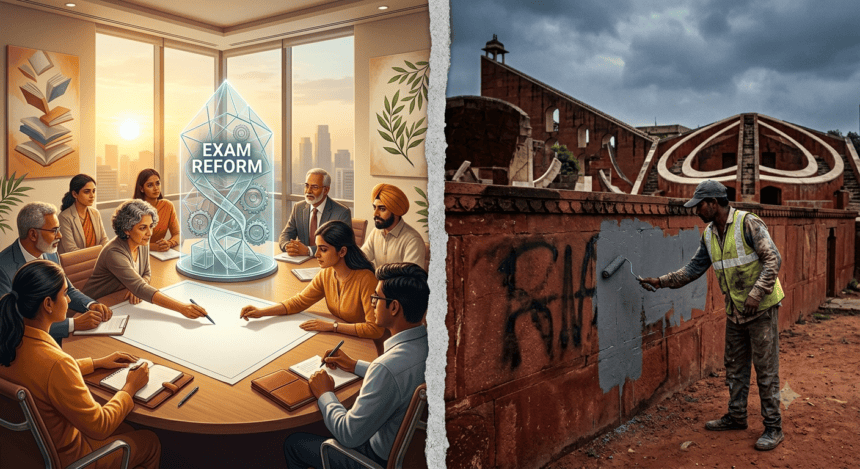
As the government pivots to reform, the physical signs of dissent are being erased. Early Tuesday, municipal workers were seen painting over anti-government graffiti and clearing protest banners at Jantar Mantar—the traditional nerve center for demonstrations in New Delhi. The site, which had become a focal point for students demanding accountability, was scrubbed clean within hours of the government’s reform announcement.
Critics argue the timing is no coincidence. “They are cleaning the walls because they can’t clean the system,” said a student leader who had been camping at the site. The opposition has labeled the move a “cosmetic gesture,” questioning why the government waited for nationwide unrest to acknowledge flaws that experts have flagged for years.
The committee’s mandate includes a complete review of the NTA’s operational structure, data security protocols, and the appointment of senior officials. While the government claims the reforms will “ensure transparency and fairness,” the efficacy of such panels remains a point of contention. Past committees tasked with educational reform have often seen their recommendations buried in bureaucratic red tape.
For now, the government is betting that a structural overhaul will appease a frustrated middle class. Whether these changes reach the actual testing centers or remain confined to office files is the question that will define the next academic cycle.
For the thousands of students currently waiting for re-examination dates, the promise of a “reformed system” offers little comfort against the reality of a lost year.