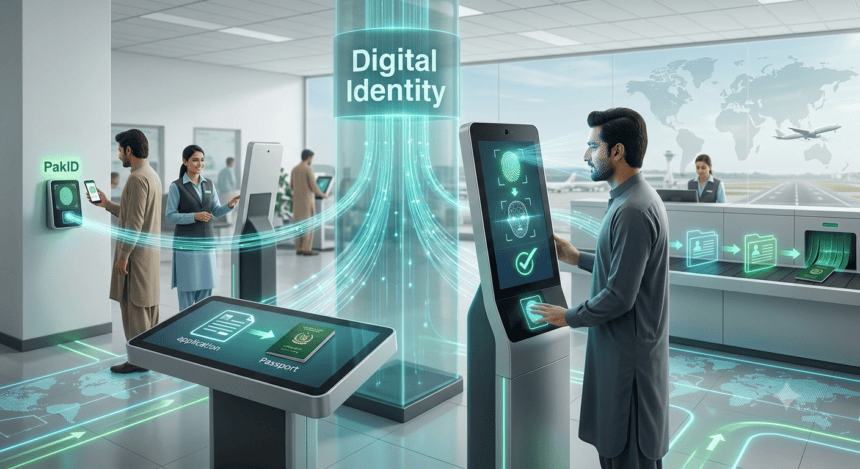
Pakistan’s passport applicants can now bypass traditional manual verification hurdles as NADRA rolls out a new digital ID verification system. The move aims to cut processing times and eliminate the human errors that have plagued the Directorate General of Immigration and Passports for years.
The new system links the passport issuance database directly with NADRA’s civil registry. Applicants no longer need to wait for physical verification slips from local police or administrative offices in many instances. Instead, the system pulls real-time biometric and residential data from the national identity database to confirm an applicant’s credentials instantly.
For the average citizen, this is a long-overdue shift. For years, the passport renewal process was often stalled by “pending verification” status, leaving travelers stranded while their files sat on a desk at a local station. By automating this, the interior ministry expects to clear the massive backlog of applications currently sitting in the system.
“We are removing the friction points,” said a senior official familiar with the rollout. “If your data matches your CNIC and your record is clean, the system clears you. There is no reason for a file to sit idle for weeks.”
The integration isn’t just about speed; it’s about security. Digital verification creates a tamper-proof audit trail. Every time a passport is processed, the system logs which officer accessed the data and when the verification was triggered. This makes it significantly harder for fraudulent documents or fake identities to slip through the cracks—a recurring issue that has drawn international scrutiny in the past.
Despite the upgrade, the system isn’t a total replacement for human oversight. Complex cases—such as those involving name changes, missing records, or legal disputes—will still be flagged for manual review. Officials confirmed that the digital pathway is prioritized for standard renewals and first-time applicants with “clean” data profiles.
The success of this rollout now depends on the stability of the servers. NADRA’s database has faced intermittent downtime during peak traffic hours in the past, and any lag in the verification handshake will immediately bring the passport printing process to a halt.
The Interior Ministry is monitoring the transition closely. If the digital verification holds up under the current volume of applications, they plan to expand the service to overseas missions by the end of the year—a move that would be a relief for millions of Pakistanis living abroad who currently face months of delays for simple renewals.