Private schools across the province must now reserve 10% of their total enrollment for underprivileged students under a newly enforced mandate. Education authorities issued the directive this week, threatening to revoke the registration of any institution failing to comply with the policy by the start of the next academic quarter.
For years, the mandate existed on paper but remained largely ignored by elite private institutions. This latest move shifts from suggestion to strict enforcement. District education officers are tasked with conducting audits to verify that these slots are filled by students from low-income households rather than being left vacant or filled by fee-paying applicants.
The policy aims to bridge the widening gap between state-run schools and the private sector, where monthly tuition often exceeds the average household income. By forcing elite schools to open their doors, the government is attempting to democratize access to quality facilities and better student-to-teacher ratios.
School administrators, however, are pushing back. “We operate on a model that requires full fee collection to cover high overhead costs, including building rent and teacher salaries,” said the principal of a private academy in the capital. He noted that the government has provided no financial subsidies or tax breaks to offset the loss of revenue from these mandatory seats.
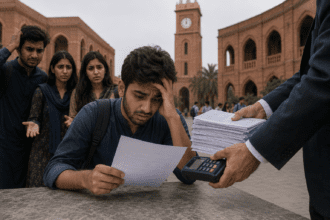
Critics of the policy argue that simply placing students in private classrooms isn’t enough. Without additional support for uniforms, textbooks, and transportation, many families will find the “free” offer unaffordable. Others worry that schools will handle the mandate by lowering their overall standards to accommodate the influx of new students without increasing staffing levels.
Education Minister officials maintain that the mandate is non-negotiable. They have set up a digital portal for families to report schools that refuse to accept scholarship-based enrollments.
The government’s deadline provides schools with less than 60 days to submit their revised admission rosters. Any institution found shielding seats will face heavy fines, and serial offenders risk losing their operating licenses entirely. For now, parents are waiting to see if these seats actually materialize—or if the private sector finds a way to skirt the rules once again.