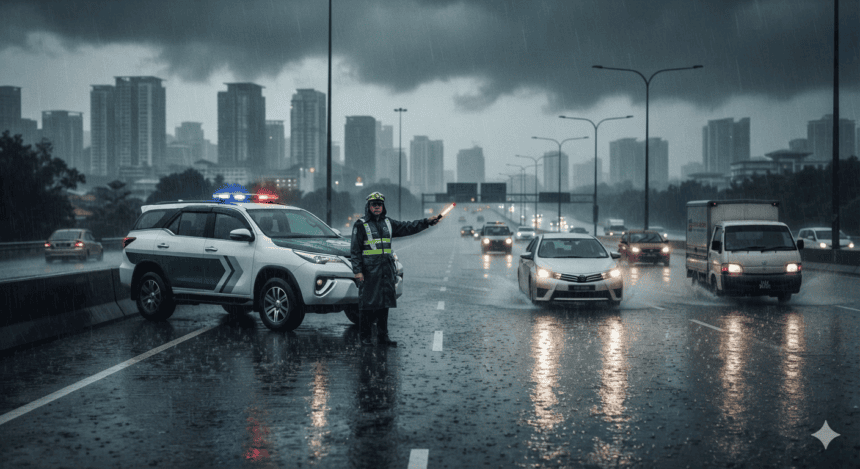
Motorway police have shifted to high alert as relentless monsoon rains turn major transit arteries into hazardous zones. Officials are advising motorists to delay non-essential travel across the M-1, M-2, and M-5 corridors, where visibility has dropped to dangerous levels.
The monsoon system, which has battered northern and central regions for the past 48 hours, shows little sign of weakening. Puddling on the asphalt is causing widespread hydroplaning, leading to a spike in minor collisions since early Tuesday morning.
“Drivers are treating the motorway like a dry-day highway,” said a spokesperson for the National Highways and Motorway Police (NHMP). “They aren’t adjusting for the reduced friction. If you don’t have to be on the road, stay home.”
Data from the control room indicates that speed-related incidents have doubled compared to last week. Despite digital speed alerts flashing across overhead gantries, many commuters are failing to maintain the mandatory safe distance. The NHMP has deployed additional patrol vehicles to enforce speed limits, but they warn that enforcement alone won’t prevent accidents caused by slick surfaces and poor drainage.
Fog lights and hazard warnings are now mandatory for any vehicle permitted on the transit routes, though police are turning away drivers with faulty equipment at toll plazas.
Beyond the immediate risk of collisions, the rain has triggered localized landslides in mountainous sections of the northern motorways. While clearance crews are standing by, the unpredictable nature of the terrain means closures could happen with zero notice.
Infrastructure experts point to aging drainage systems as a primary culprit for the persistent flooding on sections of the M-2. While the National Highway Authority (NHA) claims maintenance is ongoing, the sheer volume of rainfall has overwhelmed current capacity, leaving lanes submerged for hours at a time.
For those who must travel, the message from authorities is blunt: check the NHMP mobile app before leaving your driveway, keep your headlights on, and expect your trip to take twice as long as usual. If the rain intensifies, police are prepared to close entire sectors to prevent mass pile-ups.