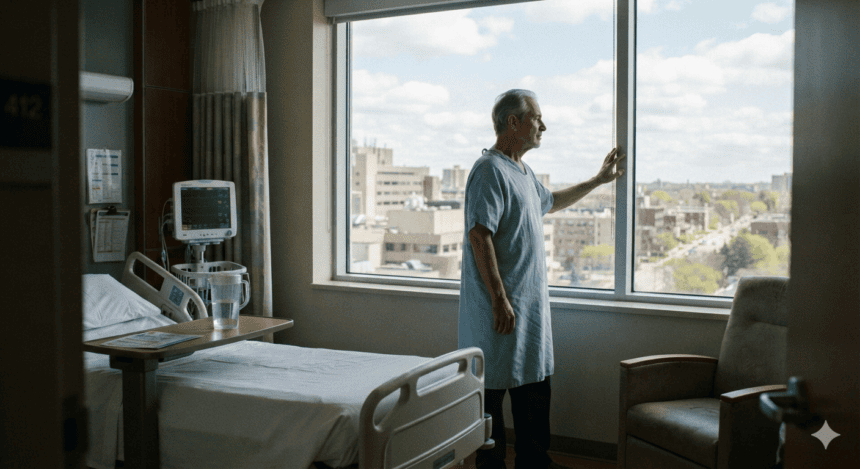
Imran Khan remains under medical observation at Adiala Jail, with his legal team and hospital staff providing conflicting signals regarding the duration of his stay. While the former prime minister was moved to the medical facility following concerns over his vitals, jail authorities maintain that his condition is stable and monitored closely.
The 71-year-old’s health has become a focal point of the ongoing political standoff. His legal counsel, Barrister Ali Zafar, has repeatedly petitioned the courts for a comprehensive medical board, citing a lack of transparency regarding the founder’s recent check-ups. The government, however, insists that a dedicated team of doctors—drawn from the Pakistan Institute of Medical Sciences (PIMS)—is overseeing his care.
Behind the scenes, the timeline for his discharge is dictated as much by court appearances as it is by blood pressure readings. Each time a hearing is scheduled, the logistics of transporting him from the medical ward to the courtroom create a security bottleneck. Prison officials have noted that keeping him in the hospital ward simplifies these security protocols, essentially turning a medical necessity into a tactical administrative choice.
“He is being provided the best possible care under the circumstances,” a senior prison official told reporters on condition of anonymity. When pressed on a discharge date, the official deflected, saying, “The medical board evaluates his vitals daily. It’s not a fixed calendar date.”
The lack of an official discharge date feeds the narrative of his supporters, who view his medical status as a proxy for his broader legal confinement. Legal experts suggest that as long as his various cases remain in the trial phase, the state is unlikely to move him back to his standard cell permanently. Keeping him in a controlled medical environment minimizes the risks associated with court-ordered transfers and public scrutiny over his health.
For now, the PTI founder remains in the medical wing. Whether he stays there for another 48 hours or two weeks depends less on his recovery and more on the high-stakes legal calendar waiting for him once he is cleared to leave.