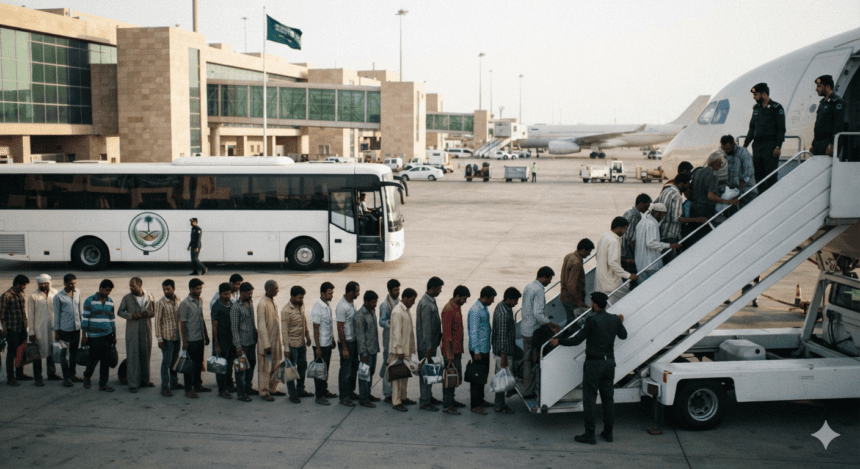
Saudi authorities apprehended and deported 13,724 individuals for violating residency, labor, and border security laws during a seven-day security sweep. The Ministry of Interior confirmed the figures Tuesday, marking a relentless push by Riyadh to tighten control over its domestic labor market and undocumented population.
The statistics, covering the period from August 29 to September 4, show the scale of the operation. Security forces detained 8,421 people for residency permit violations, while 3,366 were caught attempting to cross borders illegally. Another 1,937 individuals were flagged for labor law infractions.
This isn’t an isolated event. Saudi Arabia has maintained a high-tempo enforcement strategy throughout 2024, consistently reporting weekly deportation figures in the thousands. For the Saudi government, these operations are central to the “Vision 2030” agenda, which aims to formalize the workforce and reduce reliance on unauthorized labor.
The crackdown carries significant consequences for those caught. Beyond immediate deportation, violators face heavy fines and long-term bans from re-entering the Kingdom. The Ministry of Interior maintains a standing warning for citizens and residents alike: anyone found providing transport, shelter, or employment to illegal residents faces up to 15 years in prison and fines reaching one million Saudi Riyals.
Regional analysts note that while these sweeps aim to stabilize the economy, they place immense pressure on the expatriate communities that form the backbone of the Saudi service and construction sectors. Many of those detained are migrant workers from South Asia and East Africa who fell out of legal status due to exploitative sponsorship—or “kafala”—arrangements.
The Interior Ministry continues to urge the public to report any sightings of undocumented individuals via the emergency hotline. As the Kingdom accelerates its infrastructure projects, the government appears willing to accept the short-term labor disruption to ensure long-term regulatory compliance.
For now, the message from Riyadh is clear: the grace period is over, and the state’s enforcement apparatus is operating at full capacity.