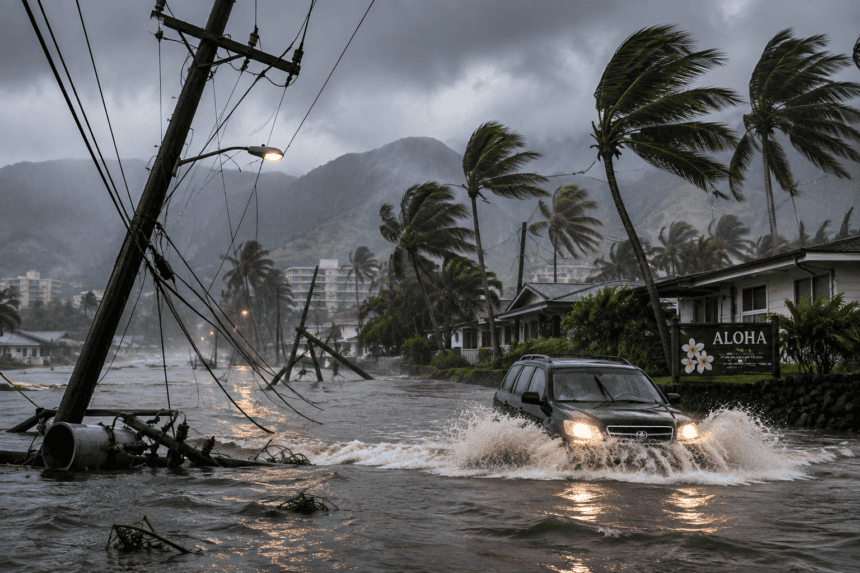
Tropical Storm Lala slammed into Hawaii’s windward coasts Tuesday night, dumping over 15 inches of rain in under six hours and knocking out electricity for nearly 80,000 residents across Oahu and Maui.
The storm—which caught many locals off guard after initial forecasts predicted a weaker system—brought sustained winds of 65 mph, enough to topple power lines and snap century-old banyan trees. Emergency crews are currently struggling to reach flooded neighborhoods in Hilo, where drainage systems were overwhelmed by the sheer volume of water.
The damage is most severe in low-lying areas. In parts of Kailua, residents are navigating streets by kayak, while the main highway connecting the northern districts remains impassable due to mudslides. Hawaiian Electric confirmed that crews are waiting for wind speeds to drop below 30 mph before they can safely begin repairs on the grid.
“The power went out around 10 p.m., and the water started creeping into the living room an hour later,” said Mark Alana, a resident of Kahaluu. “We’ve seen storms before, but nothing that climbed this fast.”
Governor Josh Green declared a state of emergency early Wednesday morning to fast-track federal assistance. While the National Weather Service downgraded Lala to a tropical depression as it tracked west, the threat of flash flooding persists. Soil across the islands is already saturated, meaning even moderate rainfall could trigger further instability in the hillsides.
State officials are warning residents to stay off the roads. Debris remains scattered across major arteries, and several critical bridges are being inspected for structural integrity after being battered by flash flood surges.
For the thousands huddled in the dark, the wait for the grid to stabilize will be long. With the storm’s outer bands still lashing the islands, the focus remains on search and rescue rather than restoration. The true scale of the wreckage won’t be clear until the clouds break and the water finally recedes.