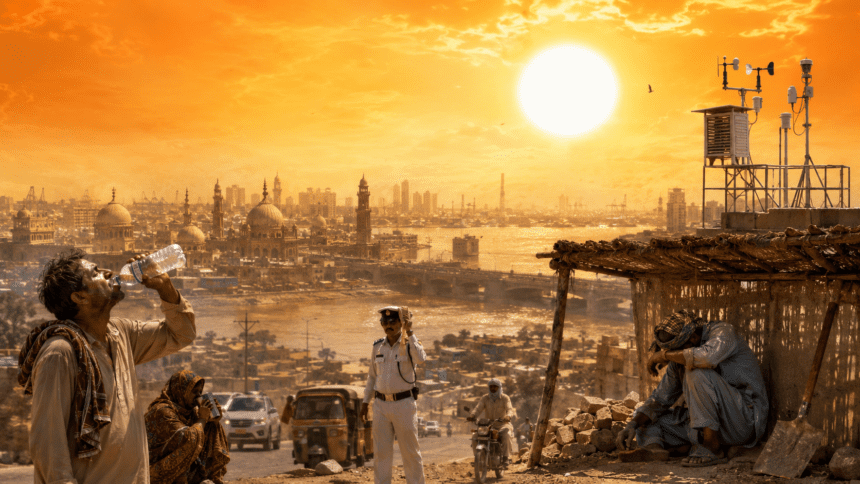
Karachi: The Pakistan Meteorological Department has warned that Sindh is likely to face moderate to severe heatwave conditions from May 25 to May 31, with temperatures in several districts expected to climb as high as 47°C to 50°C.
According to the latest advisory, a high-pressure system is expected to develop in the upper atmosphere from May 25 and intensify from May 26, pushing daytime temperatures well above normal across large parts of the country. Sindh, especially its upper and central districts, is expected to be among the hardest-hit areas.
The harshest heat is forecast in districts including Sukkur, Shikarpur, Qambar Shahdadkot, Jacobabad, Larkana, Mohenjo Daro, Dadu, Shaheed Benazirabad, Ghotki, Khairpur, Naushahro Feroze, Jamshoro and Sanghar, where the mercury may reach 47°C to 50°C during the peak spell. Lower and eastern parts of Sindh, including Hyderabad, Tharparkar, Badin, Sujawal, Thatta, Matiari, Tando Muhammad Khan, Umerkot and Mirpurkhas, are also likely to experience extreme heat.
Karachi is expected to remain very hot as well, though temperatures in the port city are forecast to stay lower than interior Sindh, around 35°C to 38°C. Still, high humidity can make the weather feel more exhausting, particularly for labourers, commuters, elderly citizens, children and people without reliable access to electricity or clean drinking water.
The warning comes at a sensitive time, with Eidul Azha holidays falling during the expected heatwave period. That means markets, cattle points, transport routes and public spaces may see heavy movement just as temperatures rise. Honestly, that combination can be dangerous if people ignore the heat and stay outdoors for long hours.
The Met Office has advised the public to avoid unnecessary exposure to direct sunlight, especially between 10am and 4pm, and to drink plenty of water. Children, women and senior citizens have been urged to take extra care. Farmers have also been advised to plan crop-related work according to the weather and protect livestock from extreme heat.
Officials have also warned that electricity demand is likely to rise during the heatwave, while water use should be managed carefully. In many parts of Sindh, extreme heat is not just a weather problem; it quickly becomes a public-health and civic-management challenge.
The PMD has called on relevant institutions to remain alert and take preventive steps during the forecast period. For residents of Sindh, the message is simple: this is not routine summer heat. The coming days could bring dangerous temperatures, and staying cautious may save lives.