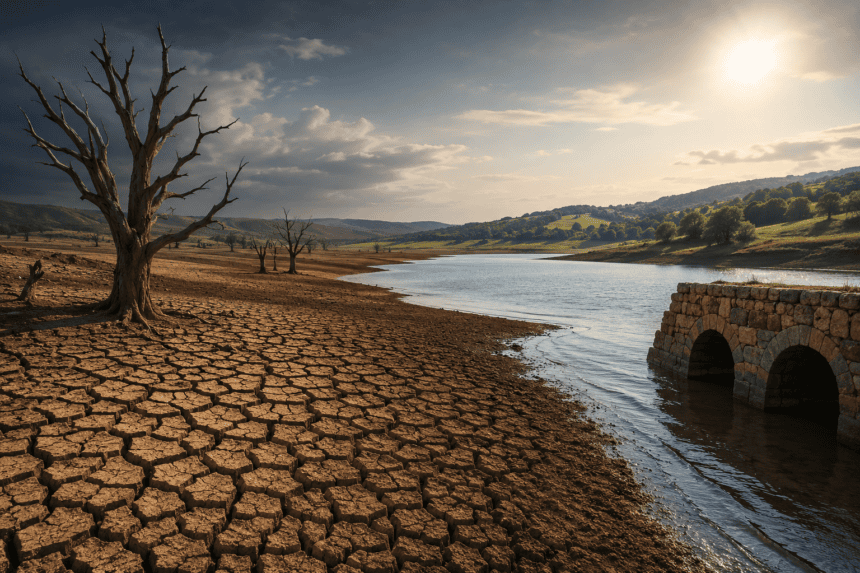
The Environment Agency has confirmed that more than 50% of England is now officially in a state of drought. Following the driest July in over 85 years, parched landscapes and depleted reservoirs have forced water companies to move from standard monitoring to emergency management.
The shift affects eight of the 14 areas tracked by the agency, including the South West, parts of the Midlands, and the South East. For residents, this means the transition from “prolonged dry weather” to a formal drought status, triggering pre-agreed contingency plans.
“We are not at the point of turning off the taps,” a spokesperson for the National Drought Group said, though they warned that the coming months remain critical. They emphasized that water companies must now implement their drought plans to protect essential supplies and minimize environmental damage to rivers and wetlands.
Farmers are bearing the immediate brunt. Crop yields for staples like potatoes, maize, and sugar beet are expected to drop significantly this season. The National Farmers’ Union has warned that without immediate, sustained rainfall, the lack of irrigation could lead to severe shortages in produce, putting further upward pressure on food prices already strained by inflation.
Beyond agriculture, the ecological toll is mounting. Low water levels in rivers have reduced oxygen, leading to localized fish kills and threatening protected habitats. The Environment Agency has already authorized emergency permits for water companies to extract more from rivers, a move that pits urban supply needs against the health of local ecosystems.
Critics argue that the crisis was preventable. They point to decades of underinvestment in infrastructure and a failure to address leakage rates—which remain at roughly 20% across the national network. While water companies blame the record-breaking heatwaves, environmental groups insist that the lack of new reservoir construction and outdated conservation policies are the true culprits.
As the government considers further restrictions, including potential hosepipe bans for millions, the public is being urged to curb non-essential usage. Whether these measures will be enough to bridge the gap until the autumn rains arrive remains the central question for the weeks ahead.