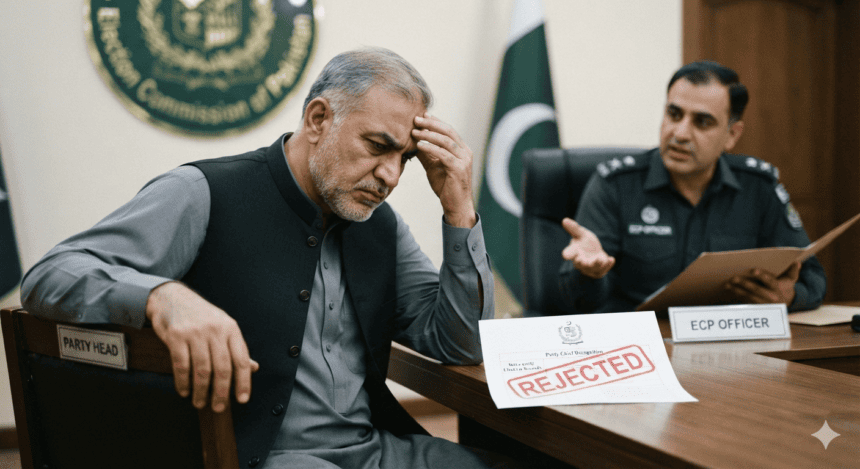
The Election Commission of Pakistan (ECP) has formally refused to recognize Mehmood Khan Achakzai as the head of the Pakhtunkhwa Milli Awami Party (PkMAP). The decision follows the party’s persistent failure to conduct mandatory intra-party elections as required by the Elections Act, 2017.
The commission’s ruling renders the party ineligible to receive an election symbol for future electoral contests. It effectively sidelines Achakzai, a veteran politician and current head of the Sunni Ittehad Council-backed opposition alliance, from leading the PkMAP in any official capacity recognized by the state.
The ECP’s order, issued Thursday, highlights a long-standing dispute over internal party democracy. Under Pakistani law, political parties must hold regular internal elections to maintain their registration and eligibility to participate in polls. The PkMAP, however, has failed to comply with these statutory deadlines, leaving the commission little choice but to revoke its recognition of the current leadership.
For Achakzai, the timing of this move is stinging. He currently serves as a central figure in the opposition’s pushback against the ruling coalition, frequently using his platform to challenge the legitimacy of the government and the electoral process itself. Stripping him of his party’s official status weakens his hand in parliamentary negotiations and internal party governance.
Legal experts note that this isn’t merely a procedural reprimand. Without ECP recognition, the party lacks the legal standing to field candidates under its own banner. It creates an immediate crisis for the PkMAP, forcing its members to either scramble to hold elections under the commission’s supervision or face total political isolation.
The PkMAP leadership has previously dismissed the ECP’s requirements as bureaucratic overreach, arguing that their internal processes are reflective of their party’s unique traditions. The commission, however, maintains that constitutional compliance is not optional.
With the party now effectively leaderless in the eyes of the electoral body, Achakzai faces a choice: conform to the state’s regulatory framework or risk watching his party’s influence evaporate in the face of legal scrutiny.