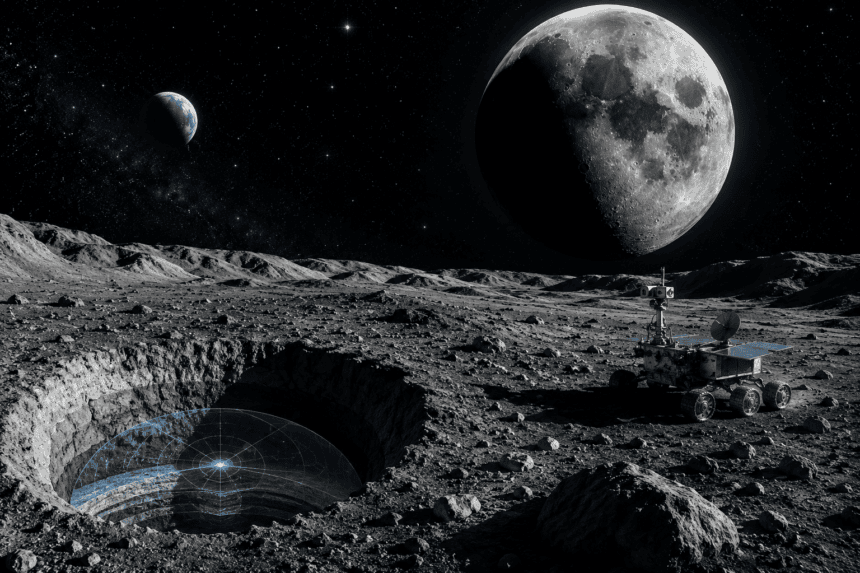
A new scientific study has revealed fresh clues about the Moon’s evolution, offering valuable insights into how Earth’s only natural satellite formed, cooled, and changed over billions of years. The latest research is helping planetary scientists better understand the Moon’s internal structure, geological history, and the processes that shaped its surface.
Researchers analyzed lunar rock samples, satellite observations, and high-resolution images collected by recent lunar missions. Using advanced computer models and geochemical analysis, scientists reconstructed key stages of the Moon’s evolution, revealing new details about its ancient volcanic activity and interior.
The study suggests that the Moon formed around 4.5 billion years ago, likely after a massive collision between the early Earth and a Mars-sized object. Following its formation, the Moon was covered by a vast magma ocean, which gradually cooled and solidified to create the lunar crust seen today.
Scientists also found evidence that volcanic activity on the Moon may have lasted longer than previously believed. Ancient lava flows and volcanic plains indicate that parts of the Moon remained geologically active for hundreds of millions of years after its formation.
Researchers are also investigating how billions of years of asteroid impacts shaped the Moon’s heavily cratered surface. These impacts provide a geological record of the early Solar System, helping scientists understand the history of both the Moon and Earth.
The findings also improve scientists’ understanding of the Moon’s interior, including its crust, mantle, and small metallic core. Studying these layers helps explain how the Moon cooled over time and why it no longer has widespread volcanic activity.
Experts say the latest discoveries will support future lunar exploration missions and may help identify regions of scientific interest for upcoming robotic and human expeditions.
Scientists believe every new lunar discovery brings humanity closer to understanding not only the Moon’s history but also the early evolution of Earth and the Solar System.