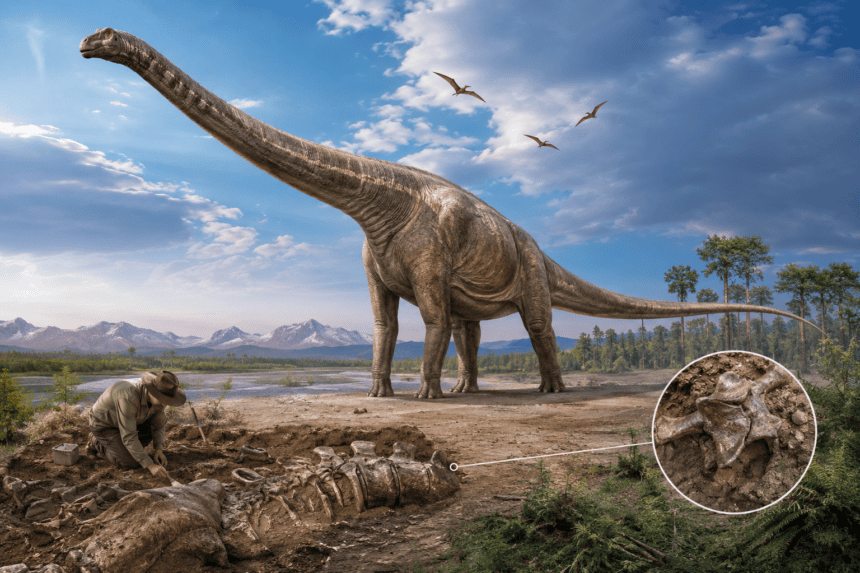
A new fossil study has revealed fresh insights into Argentinosaurus, one of the largest dinosaurs—and among the largest land animals—ever to have lived on Earth. The latest research is helping paleontologists better understand the giant herbivore’s anatomy, growth, movement, and the ecosystem it inhabited during the Late Cretaceous Period, around 95 to 97 million years ago.
Researchers examined fossilized vertebrae, limb bones, and advanced 3D digital reconstructions, combining biomechanical analysis with computer modeling to estimate the dinosaur’s size and movement. The findings provide new evidence about how Argentinosaurus supported its enormous body while walking across ancient floodplains.
Scientists estimate that an adult Argentinosaurus measured approximately 30 to 35 meters (98–115 feet) in length and may have weighed between 60 and 80 tonnes, making it one of the heaviest animals ever to walk on land. Its exceptionally long neck enabled it to feed on vegetation growing high above the ground, while its long tail helped maintain balance.
The study suggests that Argentinosaurus possessed strong, column-like legs capable of supporting its tremendous weight. Researchers believe its bones were both lightweight and durable, containing air-filled spaces similar to those found in modern birds, which helped reduce overall body mass without sacrificing strength.
Scientists also investigated how such a massive dinosaur met its enormous energy needs. They believe Argentinosaurus spent much of its day feeding on leaves, conifers, ferns, and other prehistoric plants to consume the vast amount of food required to sustain its body.
Although fully grown Argentinosaurus had very few natural predators due to its immense size, young individuals were likely more vulnerable to attacks from large carnivorous dinosaurs. Living in groups may have provided additional protection for juveniles.
Researchers say every new fossil discovery improves our understanding of sauropod evolution, prehistoric ecosystems, and the biological limits of body size in land animals. Future fossil discoveries and advanced technologies are expected to reveal even more about how these gentle giants lived and thrived millions of years ago.