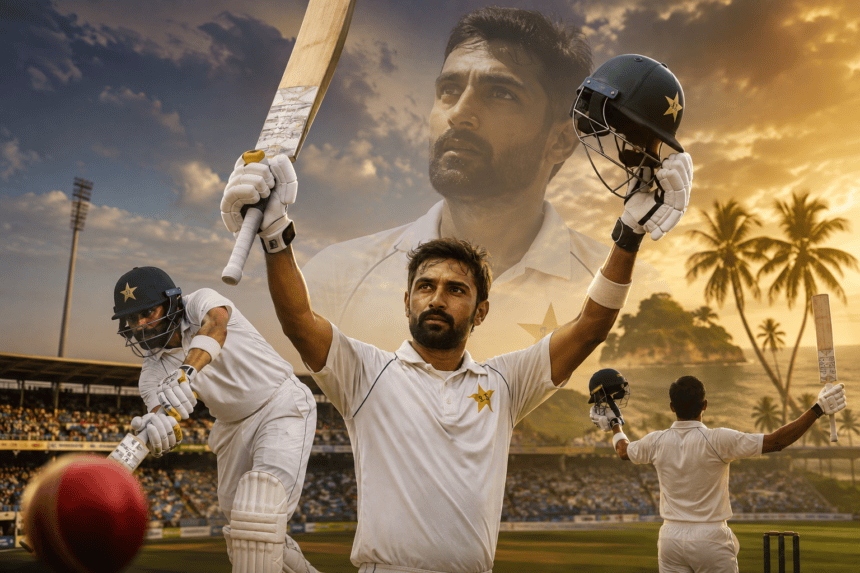
Abdullah Shafique’s career-best 160 in the second Test against the West Indies didn’t just cement his reputation as a rising star; it dismantled a streak that had haunted Pakistan cricket for nearly half a century. By anchoring a massive second-innings chase, Shafique steered Pakistan to their first Test series victory in the Caribbean since 1977.
The victory marks the end of a grueling wait. For 49 years, Pakistan had toured the West Indies and returned without a series win, often undone by the hostile pace of the Caribbean tracks or late-innings collapses. Shafique’s innings—composed, calculated, and immune to the pressure of a crumbling pitch—finally closed that chapter.
He walked out with the scoreboard looking precarious. The West Indies bowlers were hitting their lengths, and the ball was doing just enough to keep the batters guessing. Most openers would have looked to survive. Shafique looked to score.
He didn’t just rotate the strike; he punished the loose deliveries with a clinical precision that silenced the home crowd. His 160 came off 284 balls, a testament to a temperament that seems far older than his experience suggests. When he eventually fell, the game was effectively won, the required rate brought down to a crawl, and the series outcome all but guaranteed.
Critics had questioned his ability to handle the bounce of Caribbean wickets earlier in the series. He answered those questions by staying low, playing late, and leaving the ball with an almost stubborn discipline. There were no flashy shots, no unnecessary risks. Just a textbook approach to Test match batting that forced the West Indies captain into defensive field placements by the third session of the day.
The win puts Pakistan in a favorable position regarding the World Test Championship standings. Beyond the points, however, it’s the psychological barrier that has been broken. For nearly five decades, the Caribbean was viewed as a graveyard for Pakistani batting lineups.
“I just wanted to stay out there,” Shafique told reporters after the match. He kept his comments brief, refusing to dwell on the historic nature of the win. That humility, perhaps, is why he succeeded where so many predecessors failed.
The team now heads home with more than just a trophy. They leave behind a 49-year ghost, replaced by the reality that they can win—and win convincingly—on the most challenging pitches in the world.