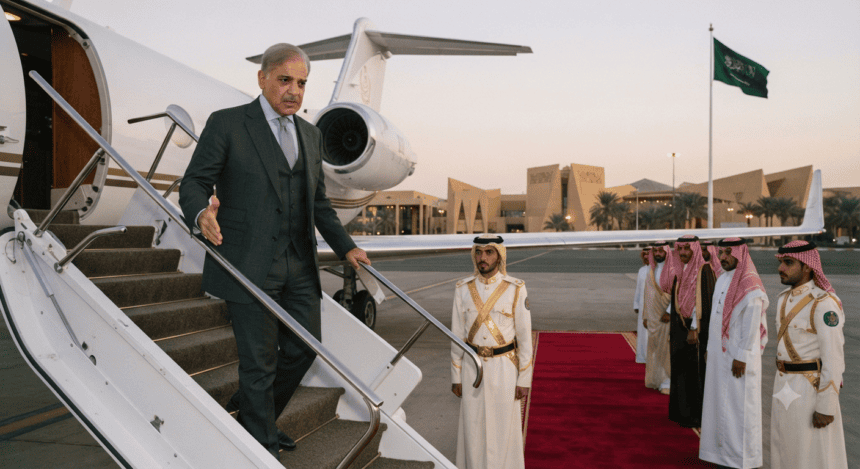
Prime Minister Shehbaz Sharif touched down in Riyadh on Tuesday, beginning a three-day official visit aimed at securing fresh economic lifelines for Pakistan. His arrival at the Royal Terminal was marked by a reception from the Deputy Governor of Riyadh, Prince Mohammed bin Abdulrahman bin Abdulaziz.
The Prime Minister isn’t here for ceremonies. He’s leading a high-powered delegation, including Finance Minister Muhammad Aurangzeb and Petroleum Minister Musadik Malik, to finalize a series of investment agreements that have been in the works for months. With Pakistan’s economy struggling under heavy debt and a narrow tax base, Riyadh remains the most critical partner in Islamabad’s bid to stabilize its balance of payments.
The centerpiece of this trip is the Future Investment Initiative (FII) — often dubbed “Davos in the Desert.” Shehbaz is slated to address the summit, where he will pitch Pakistan’s potential in the mining, agriculture, and IT sectors. Officials in Islamabad suggest that the government is looking to move beyond simple loans, pushing instead for direct equity investments from the Saudi Public Investment Fund (PIF).
“We are looking at concrete outcomes, not just memorandums,” a government aide told reporters before the flight departed. The message is clear: Pakistan needs capital, and Riyadh is the primary destination.
Behind the scenes, the talks are expected to focus on the Reko Diq copper and gold project. Saudi Arabia has expressed keen interest in acquiring a stake in the massive mining venture, a move that could inject billions of dollars into the national exchequer. If the deal crosses the finish line during this trip, it would provide the Sharif administration with a much-needed political and economic win.
The visit also serves as a diplomatic check-in. As regional tensions flare across the Middle East, the leadership in Riyadh is balancing its own shifting security priorities. For Shehbaz, maintaining the “special relationship” is a survival necessity; for the Saudis, Pakistan remains a key strategic partner that offers a massive, albeit volatile, market.
Whether this visit results in a structural shift for Pakistan’s economy or just another round of promises will depend on the fine print negotiated in the coming 48 hours. By Thursday, the government will have to show more than just photos of handshakes to convince a skeptical public back home.