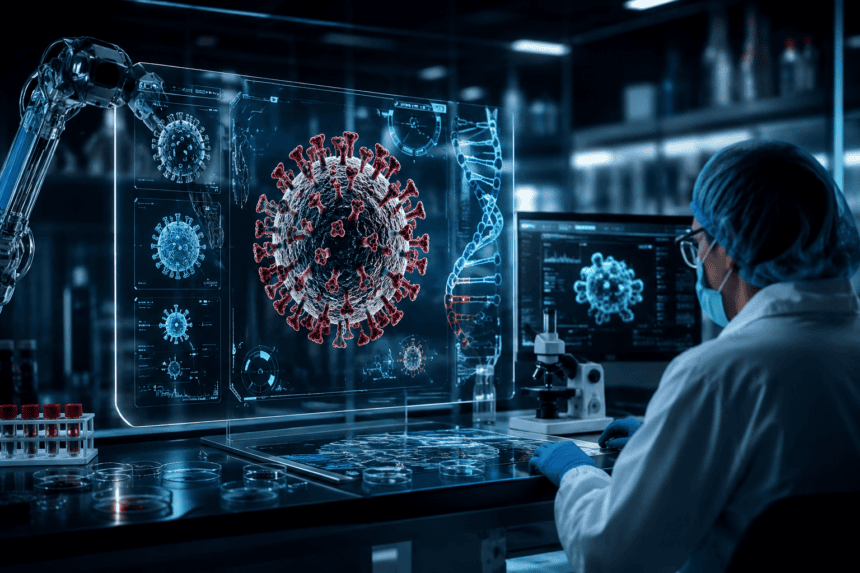
Scientists have successfully used artificial intelligence to design synthetic viruses from scratch, bypassing traditional evolutionary pathways. This development, detailed in recent laboratory studies, marks a shift in how researchers approach synthetic biology—and how security experts view the potential for misuse.
The process involves large language models (LLMs) and protein-folding algorithms—the same tools used to design life-saving drugs—now being pivoted to map the genetic sequences of viral shells. By predicting how proteins assemble, these AI models can theoretically create “de novo” viruses that have never existed in nature.
The stakes are immediate. While the primary goal of this research is to create better vaccines and understand viral defense mechanisms, the same blueprints could allow a bad actor to synthesize a novel pathogen in a private lab. Unlike historical bioweapons that relied on modifying existing flu or smallpox strains, these AI-generated sequences are entirely synthetic, meaning they lack the “genetic signature” that health agencies use to track and contain outbreaks.
Dr. Elena Rossi, a computational biologist who has tracked these developments, put it bluntly: “We are moving from a world where we discovered viruses to a world where we manufacture them. The barrier to entry for designing a pathogen has dropped from a PhD-level skill set to a prompt-engineering task.”
The current debate centers on the “dual-use” dilemma. Proponents argue that the same AI tools are essential for predicting the next pandemic and designing rapid-response therapeutics. Without this research, they claim, we remain perpetually two steps behind the natural evolution of viruses. Critics, however, point to the lack of “guardrails” in open-source AI models. Most commercial models have filters against generating chemical weapon formulas, but these biological sequence generators remain largely unregulated.
Regulatory bodies have struggled to keep pace. The U.S. Department of Health and Human Services issued updated guidelines last year for screening synthetic DNA orders, but those rules rely on identifying known sequences. They are effectively blind to synthetic sequences that don’t match existing databases.
For now, the technology remains in the hands of high-level research institutions. But as the underlying models become more accessible and computing power cheaper, the gap between theoretical risk and real-world application is closing. The question is no longer whether we can design a new virus, but whether we have the infrastructure to detect one before it leaves the lab.