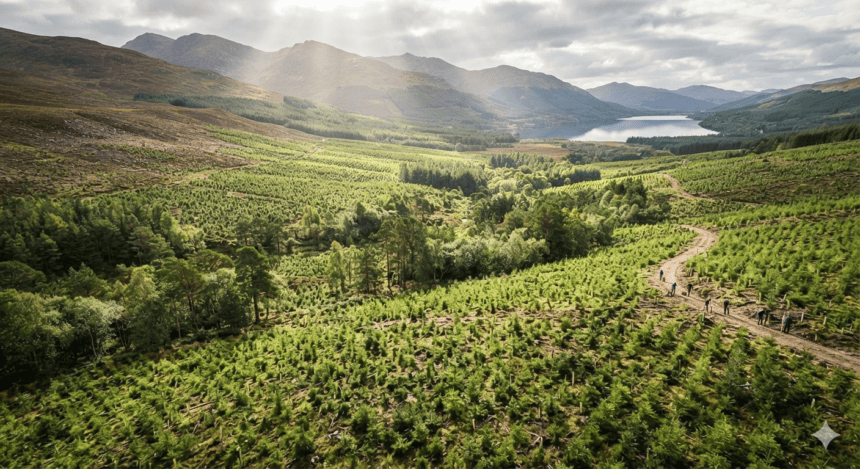
The federal government announced a $50 million infusion into national reforestation efforts today, hours after environmental agencies confirmed the two-millionth sapling was planted under the “Green Canopy” initiative. The funding, earmarked for the next three fiscal years, aims to stabilize soil erosion in northern provinces and accelerate carbon sequestration targets.
The milestone follows an aggressive 18-month planting drive that faced skepticism from critics who initially labeled the project a “symbolic gesture.” Data from the Forestry Commission suggests that 82% of the two million trees—primarily native oak and pine—have survived their first year, a success rate significantly higher than the 65% industry average for large-scale public projects.
“We aren’t just hitting numbers for a press release,” said Sarah Jenkins, the project’s lead coordinator. “We’ve spent the last six months replacing dead stock and ensuring the saplings had the irrigation support they needed to actually take root.”
The new funding isn’t just about planting more. Officials confirmed that 40% of the $50 million will be diverted toward long-term maintenance and monitoring, addressing a common failure point in previous state-led environmental programs. Local contractors, who previously struggled with delayed payments, will also receive a guaranteed payment structure to ensure the work continues through the upcoming winter season.
Despite the progress, the project faces friction. Opposition leaders argue the budget allocation is a misstep while rural road infrastructure continues to crumble. They point out that while the trees provide long-term ecological benefits, they do nothing to address the immediate logistical bottlenecks facing farmers in the regions where these forests are being established.
The Environment Minister brushed off those criticisms during a brief morning briefing, noting that the economic value of the timber and the resulting biodiversity credits will offset the initial investment within a decade.
For now, the focus remains on the ground. Planting crews are scheduled to break soil in the western highlands by Friday, targeting another 500,000 trees before the spring rains arrive. Whether this project can scale to meet the government’s ambitious ten-million-tree goal by 2027 depends on whether this influx of cash can keep the laborers in the field and the saplings alive through next year’s heat.