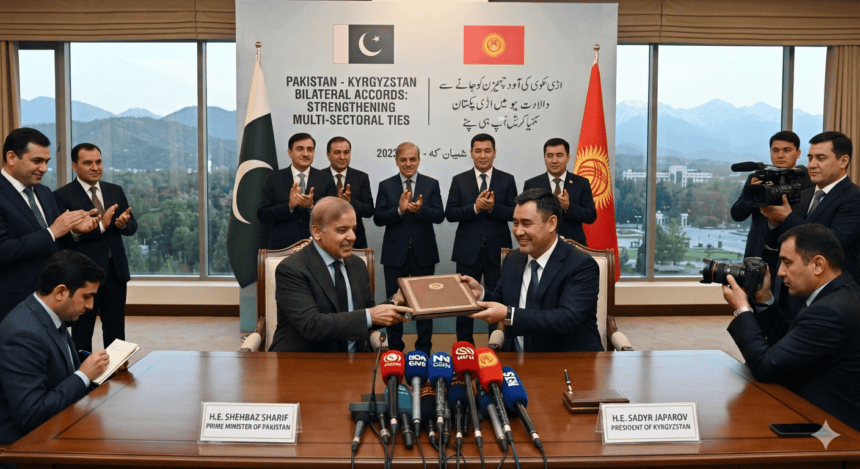
ISLAMABAD — Pakistan and Kyrgyzstan have formalized a series of bilateral agreements aimed at deepening economic and institutional cooperation, marking a shift toward integrating the two nations into the broader Central Asia-South Asia connectivity framework.
The accords, signed during high-level diplomatic exchanges, focus primarily on trade, energy, and logistical connectivity. Both Islamabad and Bishkek are looking to move beyond traditional diplomatic pleasantries, targeting specific trade bottlenecks that have historically kept bilateral volume low.
For Pakistan, the agreements serve a dual purpose: securing new markets for its textile and pharmaceutical exports while diversifying its energy dependencies. For Kyrgyzstan, the partnership offers a vital, if long-term, pathway to the Arabian Sea via Pakistan’s warm-water ports.
The documents cover, among other areas, enhanced customs cooperation and streamlined transit procedures. These measures are designed to bypass the cumbersome bureaucratic hurdles that have long plagued trans-regional trade.
“We are moving past the signing of MoUs toward implementation,” a senior official involved in the negotiations said. “The focus isn’t just on what we signed, but how quickly we can get goods moving across borders.”
Despite the optimism, the reality of the terrain remains a challenge. The lack of direct physical infrastructure and the complexities of transit through intervening territories mean these agreements face a steep uphill climb before they impact the average citizen’s wallet.
The government in Islamabad is betting that these ties will complement the broader CASA-1000 power project, which aims to bring surplus electricity from Central Asia to South Asia. If the energy corridor stabilizes, trade in consumer goods and services is expected to follow.
With the ink now dry on these latest accords, the pressure shifts to the respective ministries to prove these aren’t just paper promises. The true test will be whether the private sector sees enough stability to commit capital to these new routes.