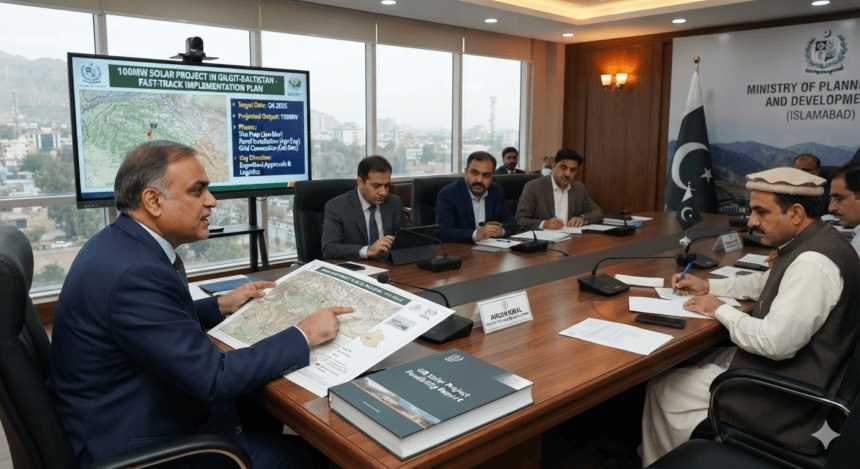
Planning Minister Ahsan Iqbal has ordered officials to fast-track the 100-megawatt solar power project in Gilgit-Baltistan, citing the region’s urgent need for a stable and sustainable energy grid.
The directive came during a review meeting in Islamabad, where Iqbal signaled that the federal government is no longer willing to tolerate delays that have kept the project in the planning phase for months. He tasked the Ministry of Kashmir Affairs and Gilgit-Baltistan with removing administrative bottlenecks immediately.
For residents of the region, the stakes are high. Gilgit-Baltistan has long struggled with chronic electricity shortages, forcing households and businesses to rely on expensive, carbon-heavy fuel generators during the harsh winter months. This project aims to pivot the region toward renewable energy, potentially lowering the massive subsidy burden currently shouldered by the federal government to keep the lights on in the north.
Iqbal’s frustration with the current pace of development was evident. He directed the relevant departments to coordinate with local authorities to ensure land acquisition and technical feasibility studies are completed without further bureaucratic friction.
“The reliance on fossil fuels is neither sustainable nor economically viable for this region,” a source familiar with the proceedings said, noting that the minister specifically pushed for a timeline that would see the project break ground before the end of the current fiscal year.
Critics have long pointed to the region’s massive, untapped solar potential, yet development has remained stagnant due to logistical hurdles and federal-provincial coordination issues. By pushing for this 100MW capacity, the government is attempting to signal a shift in its energy policy for remote territories.
The project’s success will depend on whether the Ministry can translate these directives into tangible work on the ground. If completed, the solar farm would represent one of the largest renewable energy investments in the region’s history, fundamentally changing how Gilgit-Baltistan manages its power supply.
For now, the mandate is clear: the planning phase is over, and the government is under pressure to deliver results before the next seasonal power crunch begins.