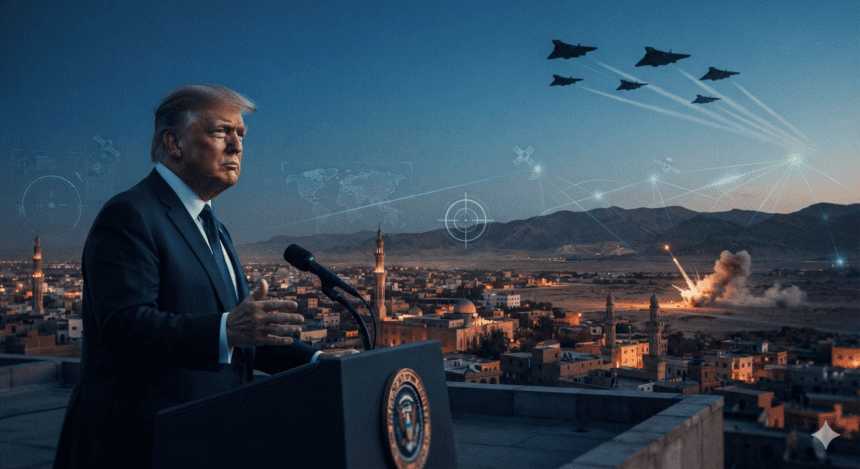
Donald Trump warned Tehran on Sunday that the United States is watching its every move, escalating his rhetoric following the recent strikes against Iranian-backed proxies. The former president, addressing supporters at a rally, framed the military actions not as isolated skirmishes, but as a calculated demonstration of American surveillance and reach.
“We see everything they do,” Trump told the crowd. “They think they’re invisible, but we’re watching.”
The comments arrive as regional tensions reach a boiling point. Recent U.S. strikes in Iraq and Syria—launched in retaliation for the drone attack that killed three American service members in Jordan—have left the White House navigating a precarious path between deterrence and regional war. Trump, leveraging his “peace through strength” campaign narrative, argued that the current administration’s approach lacks the necessary teeth to keep Tehran in check.
For the White House, the challenge is twofold. They must satisfy a domestic demand for a forceful response to American casualties while avoiding a direct, full-scale conflict with Iran. Secretary of Defense Lloyd Austin has maintained that the U.S. does not seek war, yet officials have signaled that the weekend operations were merely the start of a multi-tiered response.
Trump’s rhetoric complicates this diplomatic tightrope. By publicly detailing the extent of U.S. intelligence capabilities and threatening further unilateral action, he is effectively signaling to his base that the current strategy is insufficient. It’s a message that resonates with voters frustrated by perceived weakness abroad, though it offers little in terms of the complex tactical reality facing military planners in the Pentagon.
Tehran, for its part, has dismissed the U.S. strikes as “strategic mistakes” that will only fuel instability. While the Iranian government has avoided direct military confrontation, its network of regional militias—from the Houthis in Yemen to groups in Iraq—remains the primary instrument of its regional influence.
The danger now is one of miscalculation. As political figures in Washington trade barbs over the efficacy of airstrikes, the reality on the ground remains volatile. Whether the U.S. can maintain its “eyes-on” approach without triggering a broader escalation is the question currently defining the administration’s foreign policy agenda.
For now, the administration has pledged more strikes to come. Whether they will be enough to shift Tehran’s calculus remains the central uncertainty of the conflict.