Sea level rise isn’t just about melting glaciers. A new study published this week reveals that the amount of water stored on land—in soil, lakes, and underground aquifers—is a significantly larger driver of global sea level fluctuations than previously understood.
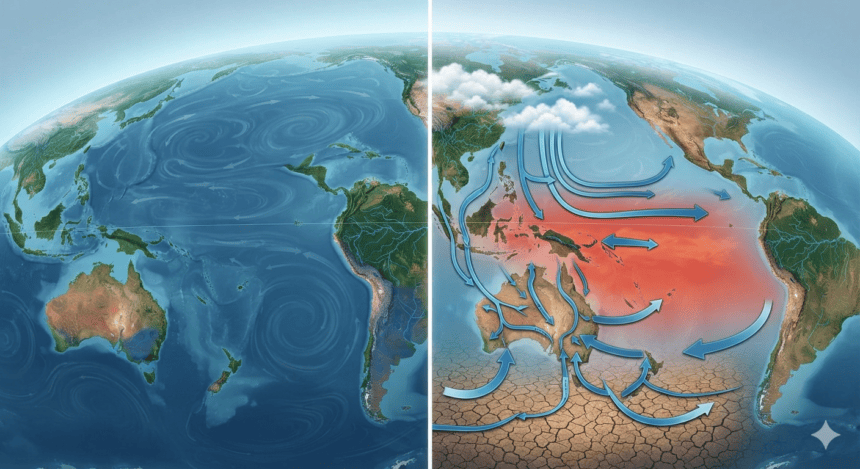
For years, climate models focused heavily on the expansion of warming oceans and the runoff from polar ice sheets. Researchers at the University of New South Wales, however, have identified that the El Niño-Southern Oscillation (ENSO) cycle acts as a “pump,” shifting massive volumes of water between the oceans and the land.
During La Niña years, increased rainfall over landmasses—particularly in Australia and the Amazon—traps water in soil and inland basins. This effectively lowers the global sea level by keeping that water out of the ocean. When El Niño arrives, that pattern reverses. The land dries out, and that stored water eventually drains back into the sea.
“We’ve been looking at the ocean as a closed system for too long,” said lead researcher John Church. “The land is essentially a giant sponge that regulates the sea level, and that sponge is becoming increasingly unpredictable as global temperatures shift.”
The study highlights a critical gap in current climate forecasting. While scientists have long known that land water storage influences sea levels, the sheer scale of this movement—accounting for up to 30% of year-to-year variability—surprised the research team. This isn’t a one-time event; it’s a rhythmic, albeit volatile, exchange.
This finding carries significant implications for coastal communities. Current sea level projections often struggle to account for short-term “noise” in the data, which can mask the long-term trend of rising waters. By isolating the impact of land water storage, scientists can now refine their models to distinguish between temporary shifts caused by weather patterns and the permanent rise driven by climate change.
The data suggests that as climate change intensifies, the “sponge” effect may weaken or shift. More frequent and intense droughts could lead to rapid, large-scale releases of land water, potentially accelerating sea level rise in ways that current infrastructure planning doesn’t account for.
For city planners in low-lying regions, the message is clear: the threat isn’t just a slow, steady creep of the tide. It is a complex, fluctuating system where land management and global weather cycles play a far more active role than anyone anticipated.