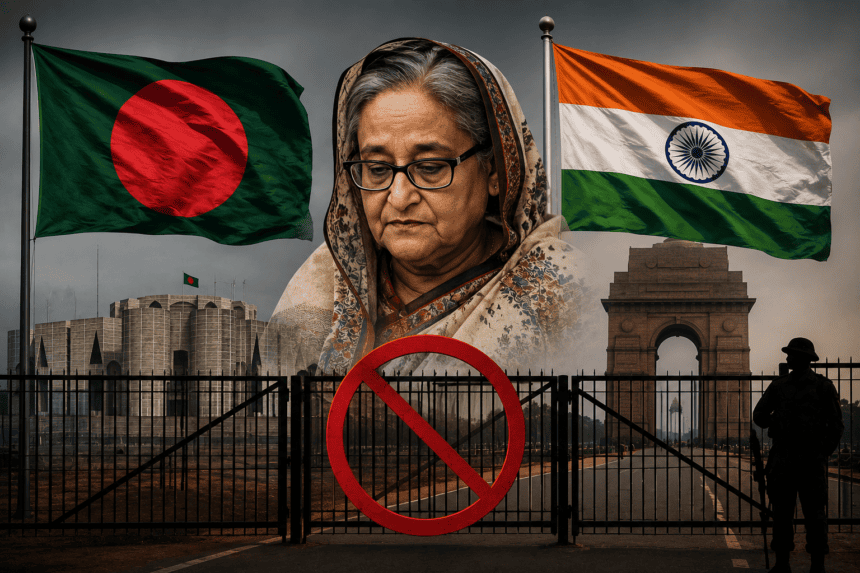
Dhaka has set a hard condition for any future high-level diplomatic engagement with New Delhi: the extradition of ousted Prime Minister Sheikh Hasina.
Foreign Affairs Adviser Touhid Hossain confirmed the stance this week, signaling a sharp shift in bilateral relations since the fall of the Awami League government. The interim administration is clear—the normalization of ties hinges on accountability for the violence that marked the final days of Hasina’s tenure.
The demand stems from the mounting legal pressure back home. Hasina currently faces dozens of cases, including charges of murder and crimes against humanity, tied to the brutal crackdown on student-led protests earlier this summer. With arrest warrants issued by the International Crimes Tribunal in Dhaka, the interim government is now moving to formalize the extradition process.
“It’s not just a political request; it’s a legal necessity,” a source close to the Foreign Ministry said. “We cannot talk about business-as-usual while the person responsible for the carnage remains shielded across the border.”
For New Delhi, the situation presents a delicate diplomatic bind. India has long viewed Hasina as a key regional ally who secured its eastern border and curbed militant activity. Now, the Modi administration faces a choice: maintain its support for a deposed leader who has become a lightning rod for anti-India sentiment in Bangladesh, or prioritize the long-term stability of a vital neighbor.
The diplomatic fallout is already visible. Trade talks have slowed, and the rhetoric from Dhaka has become increasingly blunt. While Indian officials have historically avoided public comments on Hasina’s legal status, the pressure from the streets of Dhaka is making silence an unsustainable policy.
The interim government’s ultimatum effectively freezes any prospects of a prime ministerial visit. Whether this remains a permanent rift or a temporary bargaining chip depends on how New Delhi navigates the extradition request—a move that would signal the official end of an era for both nations.
As the legal proceedings in Dhaka gain momentum, the gap between the two capitals continues to widen, leaving little room for the quiet diplomacy that defined the last decade.