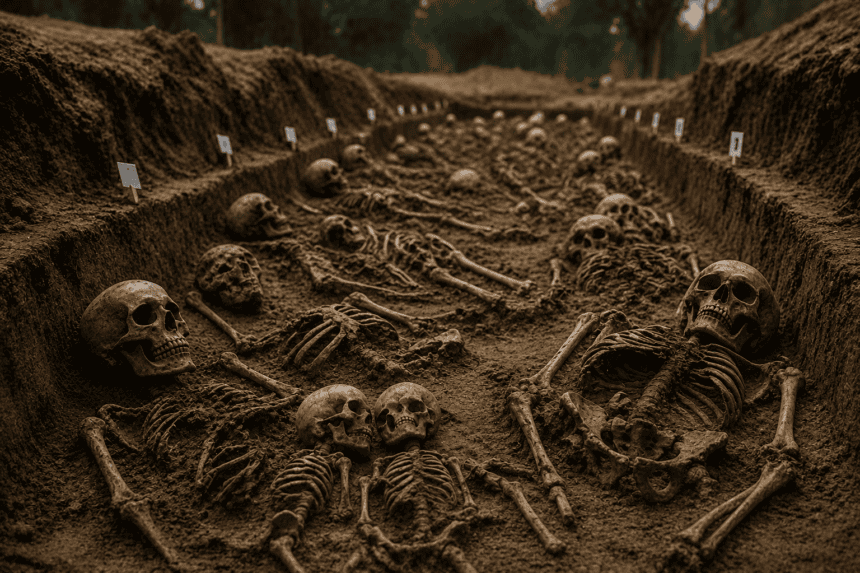
Excavators in Sri Lanka’s northern district of Mannar have recovered 582 sets of human remains from a single mass grave, marking one of the most grim discoveries linked to the country’s decades-long civil war. Forensic experts confirmed that the site, first uncovered during construction work for a new shopping complex in 2018, contains the remains of at least 29 children.
The site is located near the Thiruketheeswaram temple, a region that witnessed heavy fighting between government forces and the Liberation Tigers of Tamil Eelam (LTTE). For families of the thousands of people who went missing during the conflict, the sheer scale of the findings confirms long-held fears about the fate of their loved ones.
“We aren’t just looking at bones; we are looking at families wiped out,” said a local activist who has been tracking the excavation process. “The presence of children makes this particularly harrowing for a community still waiting for answers from the state.”
The excavation process faced significant delays and political scrutiny, with local officials initially downplaying the discovery. Forensic archaeologist Raj Somadeva, who led the investigation, noted that the remains were found in a jumbled state, suggesting they were dumped into the pit rather than buried in individual graves. Carbon dating and soil analysis indicated the remains date back to the height of the conflict in the 1990s.
Despite the recovery, the process of identifying the victims remains stalled. The Sri Lankan government has been criticized by human rights organizations for a lack of transparency and for failing to provide DNA testing resources that could offer closure to surviving relatives. Instead of a clear path toward justice, families are left with the physical evidence of mass violence and very little official accountability.
The discovery serves as a brutal reminder of the unresolved trauma left behind by the 26-year civil war. While the government has established various commissions over the years to address disappearances, none have produced a comprehensive list of the missing or prosecuted those responsible for the mass burial in Mannar.
For the people of Mannar, the site is no longer a potential commercial lot. It is a crime scene that the government has yet to fully acknowledge, and as the investigation concludes, the primary question remains: who is responsible for the hundreds of lives buried beneath the sand?