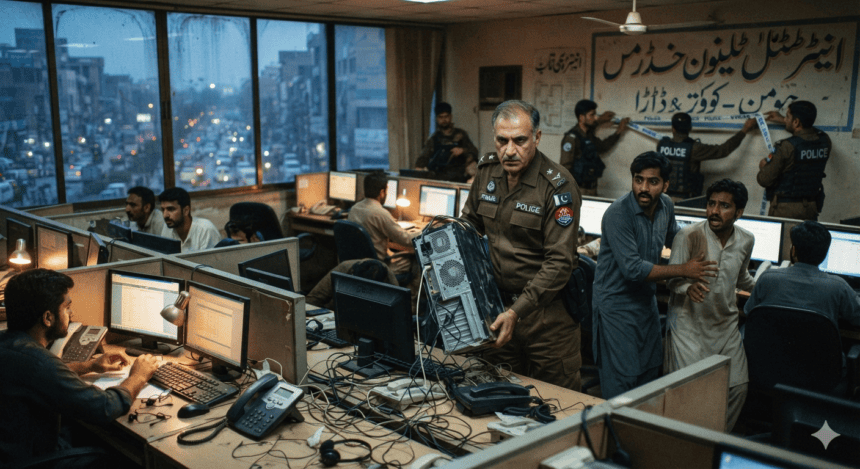
Federal investigators have launched a sweeping crackdown on unlicensed call centers operating across Pakistan, shuttering dozens of facilities accused of defrauding foreign nationals. The Federal Investigation Agency (FIA) confirmed the raids, which targeted hubs in major urban centers, including Islamabad and Lahore, following a surge in reports of identity theft and financial scams.
The operation isn’t just about closing offices; it’s an attempt to salvage Pakistan’s reputation in the global outsourcing market. For months, international law enforcement agencies—including the FBI and UK’s National Crime Agency—have flagged a rise in sophisticated “vishing” (voice phishing) schemes originating from Pakistani soil. These centers often masquerade as legitimate tech support or banking institutions, tricking victims into handing over sensitive financial data.
The scale of the operation caught many by surprise. In a coordinated sweep last week, FIA agents seized hundreds of computers, VoIP servers, and scripts designed to manipulate unsuspecting callers. While the agency has kept specific arrest numbers under wraps, sources within the Ministry of Interior suggest that the primary targets are the “masterminds” behind these illicit networks, rather than just the entry-level operators.
“These aren’t legitimate businesses,” said a senior FIA official who spoke on the condition of anonymity due to the ongoing nature of the investigation. “They are fronts for organized crime. We aren’t just looking at local law violations; we are looking at international financial crimes that have real-world consequences for the victims.”
The crackdown highlights the thin line between Pakistan’s burgeoning IT sector and its shadow industry. While the country has made strides in becoming a hub for legitimate software development and customer service, the presence of these rogue centers has created a persistent headache for policymakers. Critics argue that the government’s response has been reactive, pointing to the fact that many of these centers operate out of residential neighborhoods, often with high-speed internet and power backups that go unnoticed until a formal complaint is filed.
Beyond the tactical raids, the government is now weighing stricter oversight for all incoming and outgoing VoIP traffic. Industry leaders worry that a blanket crackdown could stifle legitimate tech investment, though they acknowledge that the status quo is unsustainable.
The pressure to act isn’t just coming from the public; it’s coming from abroad. With evidence mounting that these scams have siphoned millions of dollars from vulnerable populations overseas, the FIA is now coordinating with international partners to track the flow of illicit funds.
For now, the message from the authorities is clear: the era of operating in the shadows is coming to an end. Whether these measures will deter new players from entering the market, however, remains the primary challenge for the agency.