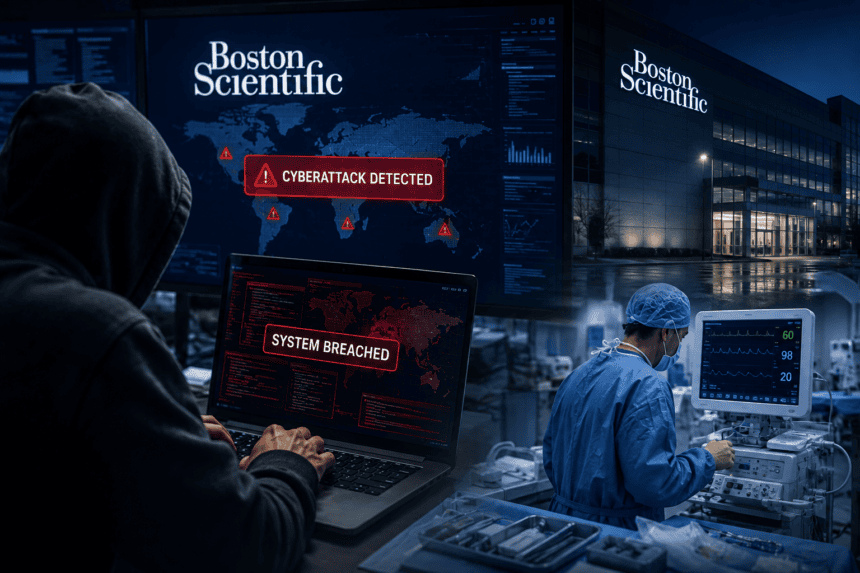
Boston Scientific is grappling with a significant operational disruption after a cyberattack hit its global systems, forcing the medical device giant to take parts of its network offline.
The company, headquartered in Marlborough, Massachusetts, confirmed that unauthorized access to its internal systems triggered a shutdown of several key processes. While the full scope of the breach remains under investigation, the company has begun rerouting logistics and supply chain operations to mitigate delays in delivering life-saving medical technology to hospitals.
The attack comes at a critical time for the healthcare sector, which has seen a surge in targeted digital extortion attempts. Sources close to the internal investigation suggest the breach involves ransomware, though Boston Scientific has yet to confirm the identity of the attackers or whether a ransom demand has been issued.
For hospitals and surgeons, the immediate concern is the supply of cardiac rhythm management devices, endoscopes, and other specialized equipment. A spokesperson for the company said they are “working around the clock” to restore normal operations, but declined to provide a timeline for full system recovery.
The incident highlights a persistent vulnerability in the medical supply chain. When a manufacturer of this scale goes offline, the ripple effects move from corporate IT departments to hospital operating rooms in a matter of hours. Cybersecurity analysts note that large-scale medical firms are increasingly prioritized by criminal syndicates because the potential for life-threatening disruption provides high leverage for ransom payments.
Boston Scientific has engaged third-party forensic experts to secure its environment and determine if patient or employee data was exfiltrated. For now, the company is relying on manual workarounds to keep essential shipments moving.
The company’s stock dipped slightly in pre-market trading as investors weighed the potential for long-term operational costs and reputational damage. Whether the incident will result in a significant data leak—or just a temporary manufacturing headache—will depend on how much of the network was compromised before the security teams pulled the plug.